

Governance
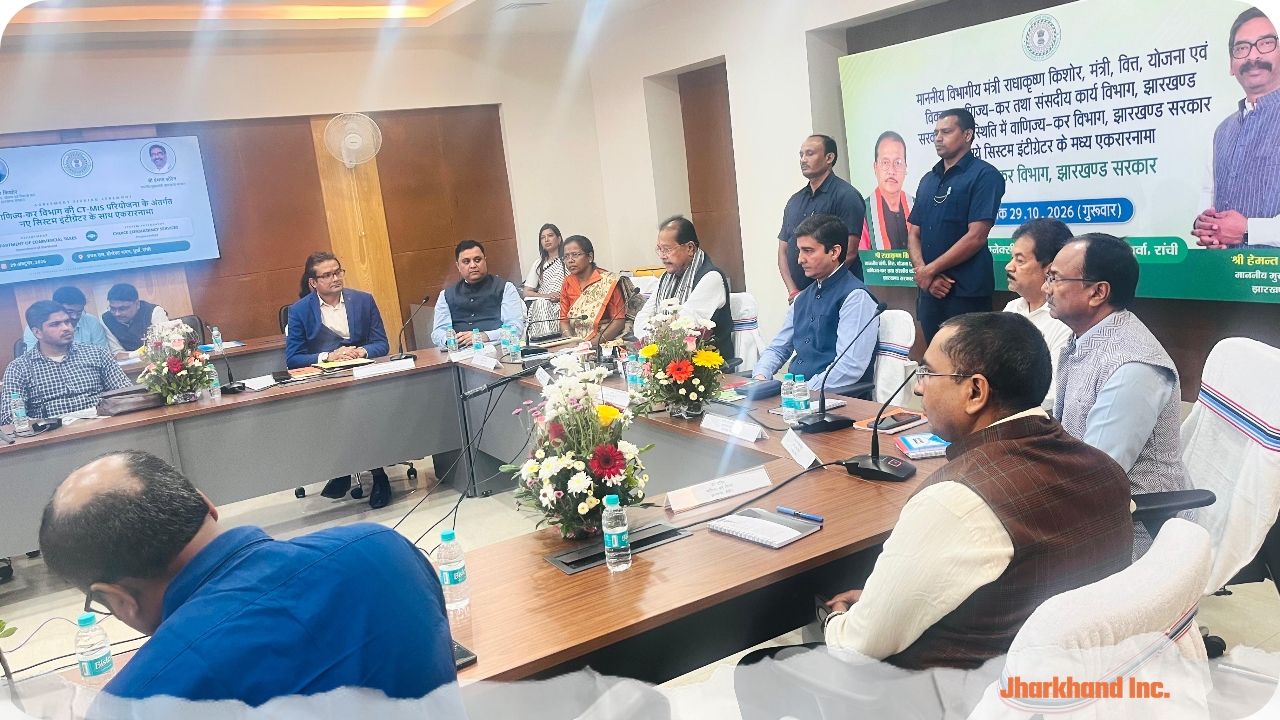
Jharkhand signs agreement to develop AI-powered revenue intelligence system
The proposed Integrated Revenue Intelligence System will connect online portals across revenue-generating departments and use business intelligence and artificial intelligence tools to flag potential tax evasion and revenue losses.













Crime20 hours ago
POCSO case against Congress MLA Bhushan Bara in Ranchi

Governance20 hours ago
Parliamentary Panel Waited Months as Jharkhand Delayed One Nation, One Election Inputs

Opinion22 hours ago
Nisha Bhagat Case: Why an Impartial CBI Probe Matters

Economy & Development1 day ago
HEC employees face job uncertainty as NCLT administrator assesses assets

East Singhbhum3 days ago
Jamshedpur wins national recognition in Swachh Survekshan 2025-26
News4 days ago
Jharkhand orders CBI probe into Nisha Bhagat’s death

Society & Public Life5 days ago
Teenage pregnancies rise to 11.7% in Jharkhand; rural rate nearly three times urban

Economy & Development1 week ago
Jharkhand to auction 62 closed coal mines again

Legal1 week ago
Jharkhand High Court quashes notification cancelling CGL appointments, protects jobs of nearly 2,000 officers
News1 week ago
Tribal activist Nisha Bhagat dies in Ranchi; death raises questions over police response and tribal land rights

Governance1 year ago
Nitin Gadkari Unveils ₹2 Lakh Crore Road Plan for Jharkhand

Governance8 months ago
Jharkhand power bill to rise from April 1 as JSERC hikes electricity tariff

Economy & Development9 months ago
India International Mega Trade Fair 2026 in Ranchi

Governance1 year ago
Ranchi to Get Jharkhand’s Largest Mall with Integrated ISBT

SOCIETY1 year ago
Bokaro Thermal Power Plant Shut Down, DVC Faces Heavy Costs

Governance1 year ago
Palash: How Jharkhand’s Women’s Collective Became a Global Case Study

Opinion1 year ago
Rivers on Life Support: The Poisoned Veins of Eastern India

Opinion1 year ago
Toxic Profits: The Hidden Economy Behind India’s Polluted Rivers

North Chhotanagpur1 year ago
BMW Industries to Invest Rs 803 Crore in Steel Plant at Bokaro, Jharkhand

Sustainability1 year ago
Jharkhand Tribal Cinema: From Culture to Commerce

Bokaro4 weeks ago
Hemant Soren inspects under-construction road in Bokaro district

Sports4 weeks ago
Jharkhand to host 15th All India Police Archery Championship from October 22

Jharkhand4 months ago
From Welfare to Enterprise: How Rs 2,500 a Month Is Helping Women Build Businesses in Koderma

Governance10 months ago
Jharkhand’s Solar Policy: Decentralised Energy in Practice

Governance1 year ago
JMM Exits Mahagathbandhan, Will Not Contest Bihar Assembly Polls

Startups & Innovation1 year ago
Birsa Munda’s Legacy Inspires Tribal Enterprise Push

Sustainability1 year ago