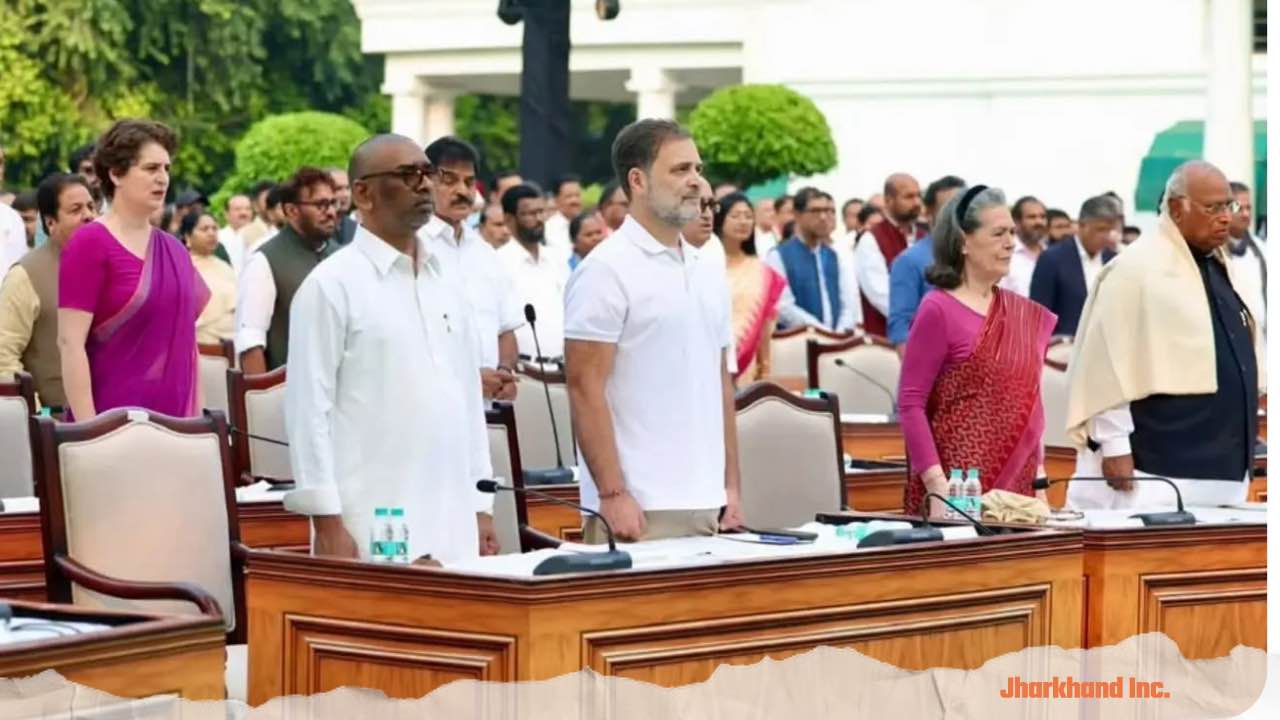
When Jharkhand Chief Minister Hemant Soren arrived in New Delhi for the INDIA bloc rally at Ramlila Maidan on November 1, a familiar question returned to the political conversation: why does he not command the national spotlight as frequently as regional leaders such as Akhilesh Yadav, Arvind Kejriwal or others in the Opposition?
The question assumes that political influence is measured by visibility. In today’s politics, where television appearances, sharp sound bites and social media exchanges often determine a leader’s national profile, a relatively restrained public presence can easily be mistaken for a lack of ambition.
But Hemant Soren’s politics offers a different way of looking at the relationship between regional leadership and national politics.
He participates in national opposition politics, but his political vocabulary remains rooted in Jharkhand. His principal concerns are not simply about challenging the government at the Centre. They are about the rights of the state’s people, the recognition of its cultural identity, the protection of its resources and its place in India’s federal structure.
That does not automatically make his political approach more effective than that of other regional leaders. It does, however, give it a distinct regional focus.
A national platform for Jharkhand’s identity
For Hemant Soren, the question of Jharkhand’s identity is not merely a cultural issue. It is closely connected with political representation, constitutional recognition and control over natural resources.
The demand for recognition of the Sarna religious code, for instance, reflects a long-standing aspiration among sections of the state’s Adivasi communities to have their distinct religious identity recognised in the national framework. Similarly, the politics of Jal, Jungle, Zameen is rooted in the historical struggle over land, forests, livelihoods and the rights of indigenous communities.
These issues give Soren’s interventions a specific regional character. When he speaks about tribal identity or resource rights, he is also raising questions about how India’s development model accommodates communities whose lives and livelihoods are closely connected with land and forests.
The challenge, however, is to translate political advocacy into institutional outcomes. Recognition of the Sarna code remains a demand, not an accomplished constitutional change. The distinction between raising an issue and securing a decision matters.
Mineral wealth and the politics of federal rights
Perhaps the clearest example of Soren taking Jharkhand’s concerns to the national level is the dispute over mining-related dues.
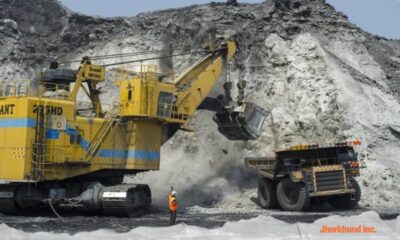
His government has maintained that Jharkhand is entitled to Rs. 1.36 lakh crore in outstanding payments linked to mineral extraction by central public sector undertakings. Soren has repeatedly argued that the state’s mineral wealth has generated enormous economic value, while the state and its people have not received what he considers their legitimate share.
The issue acquired renewed significance after the Supreme Court’s 2024 judgment on the power of states to tax mineral rights and mineral-bearing land. But the subsequent Mines and Minerals (Development and Regulation) Amendment Act, 2026, has altered the legal and financial context. Jharkhand has decided to challenge the amended law in the Supreme Court. The state government argues that the changes undermine its revenue claims, while the Centre’s position and the legal questions surrounding the amendment remain part of the larger dispute. Source Source
This is more than a contest over a large financial figure. It raises a fundamental question about Indian federalism: how much control should mineral-rich states have over the economic value generated from resources extracted within their territories?
For Jharkhand, the question has direct implications for public finances, infrastructure, environmental restoration and social development. Mining brings economic activity, but it also leaves behind damaged land, pressure on local infrastructure and long-term environmental costs.
Soren’s emphasis on the state’s claim is therefore politically significant. Yet the credibility of this position will ultimately depend not only on the legal outcome but also on how effectively any additional revenue is used for the people and regions that bear the costs of extraction.
Regional priorities within a national alliance
National alliances often require regional parties to balance their own political agendas with the broader objectives of coalition politics. This can be difficult, particularly for parties whose electoral strength is closely connected with regional identity and local concerns.
The JMM’s politics has historically drawn strength from the idea that Jharkhand’s people must have a greater say in the state’s resources, institutions and opportunities. Soren’s position on the proposed domicile framework based on 1932 land records reflects that political inheritance.
The Jharkhand Assembly passed the 1932 Khatiyan-based domicile bill in 2022, but it did not become an operational policy simply through that legislative approval. The bill encountered constitutional and procedural objections after being returned by the then Governor. Its political significance has continued, but its legal and administrative status should not be confused with an implemented domicile regime. Source
The issue remains politically sensitive because it concerns the relationship between historical belonging, constitutional principles, employment opportunities and the aspirations of local youth.
Soren’s challenge is to defend the concerns that underpin this demand while finding a legally sustainable framework that can withstand constitutional scrutiny. That is a more complicated task than simply repeating an electoral promise.
Governance at home matters more than visibility in Delhi
A regional leader’s national relevance cannot be judged only by speeches delivered in the capital. It must also be assessed through the quality of governance in the state.
Initiatives such as Aapki Yojana, Aapki Sarkar, Aapke Dwar sought to take government services and welfare schemes closer to people, particularly in rural areas. The Maiyan Samman Yojana has also become a major part of the state’s welfare and political landscape.
These initiatives reflect an emphasis on direct engagement and benefit delivery. But their success should be measured through more than the number of beneficiaries or the amount of money transferred. The more important questions concern the quality of implementation, the regularity of payments, access for eligible households, and whether welfare support is accompanied by better healthcare, education, employment and public infrastructure.
This is where Soren’s political approach must face its most important test. A government cannot establish its regional credentials merely by invoking identity and welfare. It must demonstrate that these priorities are improving everyday life.
A different measure of political presence
There is little reason to assume that every regional leader must pursue the same model of national visibility. Some build influence through frequent public confrontation; others work through parliamentary alliances, federal negotiations and state-specific campaigns.
Hemant Soren’s political profile has been more closely associated with the latter set of concerns. His presence in Delhi as an INDIA bloc partner does not necessarily mean that his political ambitions are confined to the national Opposition’s agenda. Equally, his relatively limited national visibility should not automatically be treated as evidence of a more principled or effective style of politics.
The distinction lies elsewhere: Jharkhand’s identity, mineral resources, tribal rights and regional aspirations remain central to the political narrative he presents beyond the state.
Ultimately, the measure of Hemant Soren’s leadership will not be how often he appears on national television, how forcefully he attacks political opponents or how prominently he stands on a Delhi stage. It will be whether he can convert the demands he carries from Jharkhand into durable legal, economic and social outcomes.
Delhi may be the stage on which national politics is played out. For Hemant Soren, the more consequential political test remains at home, in the villages, mining regions and tribal communities of Jharkhand.









Pingback: how to activate esim on iphone duo