News
Tribal activist Nisha Bhagat dies in Ranchi; death raises questions over police response and tribal land rights
Facebook Live broadcast before her death, reported calls to police and allegations of harassment trigger political demands for a CBI probe; Opposition leaders question alleged administrative inaction
Published
2 weeks agoon
RANCHI: The death of tribal rights activist Nisha Bhagat at her residence in the Pithoria police station area of Ranchi on Friday has triggered political controversy and raised questions over alleged harassment, tribal land dealings and the response of the police to her complaints.
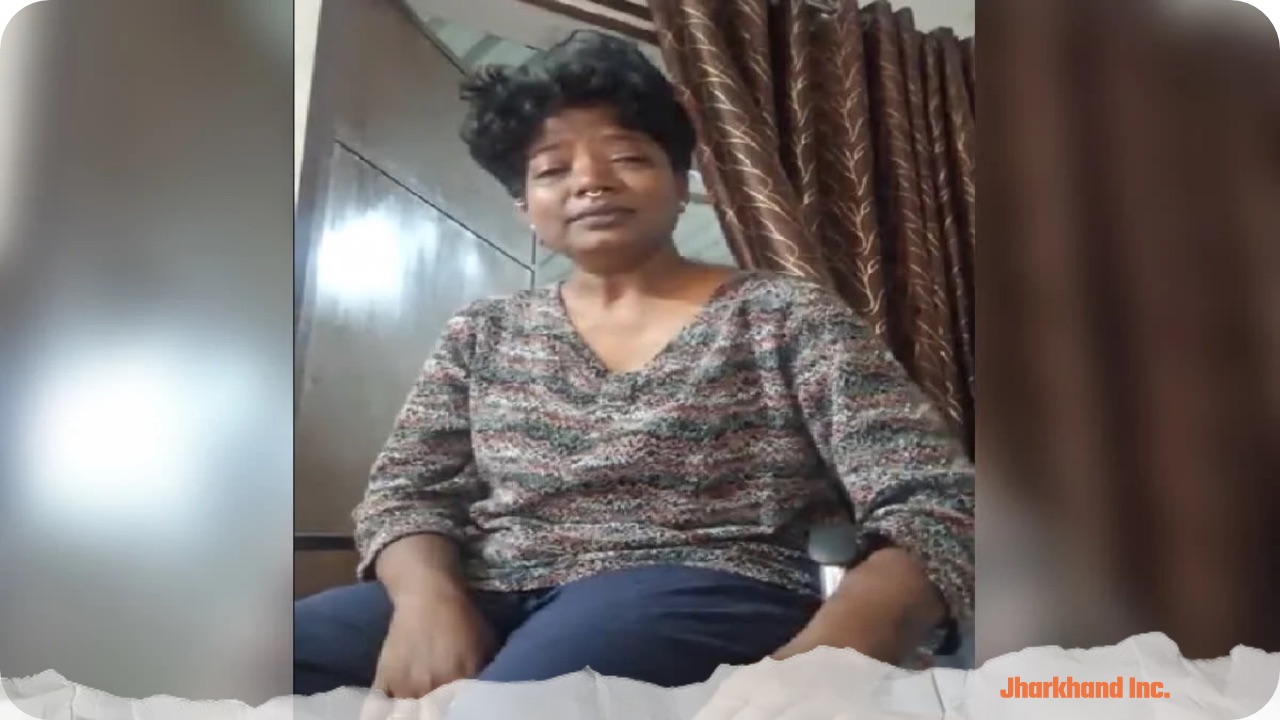
Bhagat reportedly went live on Facebook shortly before her death, speaking about the difficulties she had faced and accusing several people of attempting to malign her reputation. She also raised allegations concerning people allegedly involved in land dealings and expressed frustration over what she described as the authorities’ failure to address her grievances.
During the broadcast, she reportedly contacted the officer in charge of Pithoria police station and indicated that she was contemplating ending her life. Media reports also referred to an earlier call to Kanke police station. The circumstances surrounding these communications and the police response are yet to be officially established.
Police reached her residence after receiving information about the incident and shifted her to hospital, where doctors declared her dead. Her body was subsequently sent to the Rajendra Institute of Medical Sciences (RIMS) for post-mortem examination.
The reported telephone conversation between Bhagat and the Pithoria police officer has emerged as an important aspect of the case. Investigators will need to establish when the police received the information, what concerns she communicated and what action followed. Her Facebook broadcast, telephone records, previous complaints, if any, and statements from people familiar with her circumstances are also relevant to establishing the sequence of events.
Leader of the Opposition Babulal Marandi visited RIMS following her death and accused the Hemant Soren government of failing to protect tribal rights activists. He alleged that people involved in illegal land dealings enjoyed political protection and demanded the arrest of those named in connection with Bhagat’s complaints.
Marandi specifically demanded the arrest of the Pithoria police officer and Ajay Tirkey, whom he accused of being associated with the alleged land dealings. He also sought a CBI investigation, arguing that an independent agency should examine the circumstances surrounding her death and the allegations she had raised.
Marandi further demanded Chief Minister Hemant Soren’s resignation, alleging that the state administration had failed to protect tribal communities and their land rights.
BJP state president Aditya Sahu also demanded a CBI investigation. He alleged that Bhagat had been vocal against religious conversion and land dealings and had faced opposition because of her positions on these issues. Sahu said the investigation should establish whether she had faced threats, pressure or harassment.
Sahu visited RIMS and met her family members. Union Minister of State for Defence Sanjay Seth, former BJP state president Deepak Prakash and other party leaders were also present.
JLKM MLA Jairam Kumar Mahato expressed grief over Bhagat’s death and demanded an SIT investigation along with a CBI probe. In a post on X, he described her as a determined tribal activist and said she had contested the 2024 Assembly election from Gumla as a JLKM candidate.
Mahato questioned whether Bhagat’s reported telephone call to the police before her death had received adequate attention. He also called for an investigation into the allegations made during her Facebook Live broadcast, particularly those concerning land dealings, harassment and the treatment of tribal women.
He raised wider concerns about the protection of tribal land under the Chotanagpur Tenancy (CNT) Act and the Santhal Pargana Tenancy (SPT) Act, arguing that violations of land protection laws required stronger scrutiny.
Bhagat, originally from Gumla district, was known for her outspoken positions on tribal rights, land protection, cultural identity and the Sarna faith. Her activism frequently featured in public debates concerning indigenous religious identity and the relationship between Sarna and Sanatan traditions.
Her background reflected a combination of professional experience and social activism. She completed her schooling at Ursuline Convent in Gumla and studied science at Kartik Oraon College. She subsequently pursued hotel management in Durgapur, worked with ITC in Bengaluru and later studied mass communication before becoming associated with journalism.
She had also worked as a government contractor, undertaking construction projects including bridges, concrete roads and school buildings. In an earlier media interview, she spoke about working in areas where contractors were reluctant to take up projects because of security concerns.
Her father was associated with the Jharkhand movement, and Bhagat had often referred to his struggles as an important influence on her own commitment to social issues. She had spoken about the hardships her family faced during the movement and said these experiences shaped her understanding of tribal rights and social justice.
She was particularly vocal about preserving tribal languages and cultural traditions. A speaker of Kurukh, she emphasised the importance of indigenous identity and the preservation of traditional practices.
Bhagat’s death has also brought renewed attention to the continuing debate over tribal land protection in Jharkhand. The CNT and SPT Acts provide statutory safeguards governing land transfers in their respective areas. However, allegations concerning fraudulent transactions, illegal possession, land disputes and administrative failures continue to be raised in different parts of the state.
The central issue now is whether Bhagat had previously approached the authorities with complaints, whether those complaints were acted upon and whether any harassment or external pressure contributed to the circumstances preceding her death.
The police investigation will need to establish the sequence of events through the Facebook broadcast, telephone records, official complaints, post-mortem findings and other relevant evidence. The individuals named in the allegations must also be given an opportunity to respond.
As of Friday, police had not announced any final findings establishing the circumstances or reasons behind her death. The allegations made by Bhagat and the claims raised by political leaders remain subject to independent verification.
The case has consequently moved beyond a single incident to raise broader questions about the protection of tribal rights activists, the functioning of local police institutions and accountability in matters involving alleged violations of tribal land rights in Jharkhand.
You may like
-
Jharkhand Cabinet Clears College, Roads and DA Relief
-
Ulgulan 2050: One year on, Jharkhand faces a delivery test
-
Parliamentary Panel Waited Months as Jharkhand Delayed One Nation, One Election Inputs
-
Nisha Bhagat Case: Why an Impartial CBI Probe Matters
-
Jharkhand orders CBI probe into Nisha Bhagat’s death
-
Jharkhand to auction 62 closed coal mines again
Jharkhand Cabinet Clears College, Roads and DA Relief
BJP seeks Governor’s intervention in Bhushan Bara case
Ulgulan 2050: One year on, Jharkhand faces a delivery test
POCSO case against Congress MLA Bhushan Bara in Ranchi
Parliamentary Panel Waited Months as Jharkhand Delayed One Nation, One Election Inputs
Nisha Bhagat Case: Why an Impartial CBI Probe Matters
HEC employees face job uncertainty as NCLT administrator assesses assets
Jamshedpur wins national recognition in Swachh Survekshan 2025-26
Jharkhand orders CBI probe into Nisha Bhagat’s death
Teenage pregnancies rise to 11.7% in Jharkhand; rural rate nearly three times urban
Nitin Gadkari Unveils ₹2 Lakh Crore Road Plan for Jharkhand
Jharkhand power bill to rise from April 1 as JSERC hikes electricity tariff
India International Mega Trade Fair 2026 in Ranchi
Ranchi to Get Jharkhand’s Largest Mall with Integrated ISBT
Bokaro Thermal Power Plant Shut Down, DVC Faces Heavy Costs
Palash: How Jharkhand’s Women’s Collective Became a Global Case Study
Rivers on Life Support: The Poisoned Veins of Eastern India
Toxic Profits: The Hidden Economy Behind India’s Polluted Rivers
BMW Industries to Invest Rs 803 Crore in Steel Plant at Bokaro, Jharkhand
Jharkhand Tribal Cinema: From Culture to Commerce
Hemant Soren inspects under-construction road in Bokaro district
Jharkhand to host 15th All India Police Archery Championship from October 22
From Welfare to Enterprise: How Rs 2,500 a Month Is Helping Women Build Businesses in Koderma
Jharkhand’s Solar Policy: Decentralised Energy in Practice
JMM Exits Mahagathbandhan, Will Not Contest Bihar Assembly Polls
Birsa Munda’s Legacy Inspires Tribal Enterprise Push