Connect with us

Business & Industry

India International Mega Trade Fair 2026 in Ranchi

The 11th India International Mega Trade Fair will be held from March 26 to April 6 at Morabadi Maidan, Ranchi, featuring 480+ stalls, 12 countries and MSME participation under a Union government support scheme.

Published

on

India International Mega Trade Fair 2026 in Ranchi

The 11th edition of the India International Mega Trade Fair will be held from 26 March to 6 April 2026 at Morabadi Maidan, Ranchi. But beyond the exhibition format, this year’s edition raises a larger question for Jharkhand’s MSME ecosystem: is this an opportunity for sustained market expansion or merely a recurring showcase?

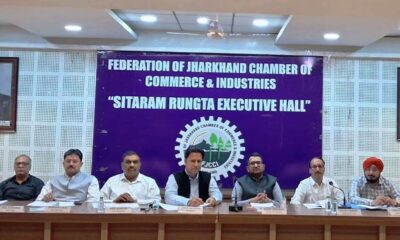
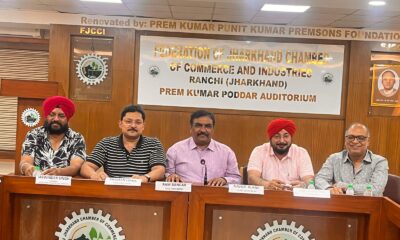
The announcement was made at a press conference at Chamber Bhawan by the Federation of Jharkhand Chamber of Commerce and Industries (FJCCI). Officials confirmed that the event has received administrative approval under the Union MSME Ministry’s Procurement and Marketing Support Scheme. Under this provision, eligible MSME units from Jharkhand will be entitled to reimbursement on stall bookings.

While reimbursement lowers participation barriers, the real test lies in outcomes. With more than 480 stalls planned across 10 business hangars, the scale is substantial. The question remains how many state-based MSMEs will convert exhibition presence into supply contracts, distributor tie-ups or long-term B2B relationships.

Ranchi’s Expanding Consumer Economy

Open daily from 11 am to 9 pm, with entry priced at Rs 30 and special night markets scheduled every Saturday, the fair is designed as both a business platform and a public retail experience.

Sectors on display will include real estate, home décor, furniture and interior, electronics, automobiles, processed food, healthcare, handicrafts and handloom products. The prominence of lifestyle and consumer-driven sectors reflects Ranchi’s changing urban profile. The city is steadily emerging as a consumption centre, driven by rising disposable incomes and growing middle-class aspirations.

Weekend night markets, in particular, signal a shift toward experience-based retail culture. For many urban families, such fairs are no longer just shopping venues but social spaces.

International Participation and Sub-National Trade

According to organisers, the fair will see participation from eight Indian states and 12 foreign countries, including Afghanistan, Thailand, Canada, Israel and Dubai.

International presence adds diversity, but it also brings a broader economic dimension. While formal trade diplomacy rests with the Union government, sub-national trade engagement through exhibitions has become increasingly common across Indian states. Whether this participation leads to structured commercial linkages or remains symbolic will depend on follow-up engagement beyond the event calendar.

FJCCI president Aditya Malhotra said the objective is to strengthen both B2B and B2C trade and provide a larger platform for entrepreneurs. Secretary General Rohit Agarwal noted that the fair aims to project Jharkhand’s commercial potential at national and international levels.

Continuity and Trade Ambition

The 11th edition itself signals continuity. Repetition builds institutional credibility. Over time, recurring trade fairs can help cities carve a commercial identity.

The larger question is whether Ranchi is gradually positioning itself as an eastern India trade node. Can annual mega fairs evolve into a structured trade ecosystem supported by logistics, warehousing and investor confidence? Is the state government integrating such events into a broader economic roadmap?

These are structural questions that extend beyond exhibition days.

Start-Ups and First-Generation Entrepreneurs

Organisers have indicated that local entrepreneurs, start-ups and MSME units will receive a platform to showcase products and services.

For first-generation businesses, such exhibitions often serve as testing grounds. Exposure to market feedback, competitor benchmarking and direct consumer interaction can shape future strategy. Yet structural challenges remain. Access to credit, technology adoption and sustained policy support will ultimately determine whether start-ups scale beyond exhibition circuits.

The Infrastructure Question

Industry representatives have reiterated the need for a permanent exhibition complex in Ranchi on the lines of Pragati Maidan.

While Morabadi Maidan continues to host large events, the absence of a dedicated, modern trade infrastructure limits year-round exhibition potential. If Jharkhand seeks to project commercial ambition consistently, reliance on temporary grounds may eventually prove restrictive.

As Ranchi prepares for the India International Mega Trade Fair 2026, the event stands as both marketplace and marker. It reflects a state in transition, balancing aspiration with infrastructure, and visibility with long-term economic depth.

Continue Reading
Click to comment

Leave a Reply

Your email address will not be published. Required fields are marked *