Jharkhand’s economy has long faced a contradiction.
The state is rich in minerals, forests and natural resources. Yet it remains one of India’s largest sources of migrant labour. Thousands of workers leave Jharkhand every year for jobs in Delhi, Mumbai, Gujarat, Maharashtra, Karnataka and Tamil Nadu.
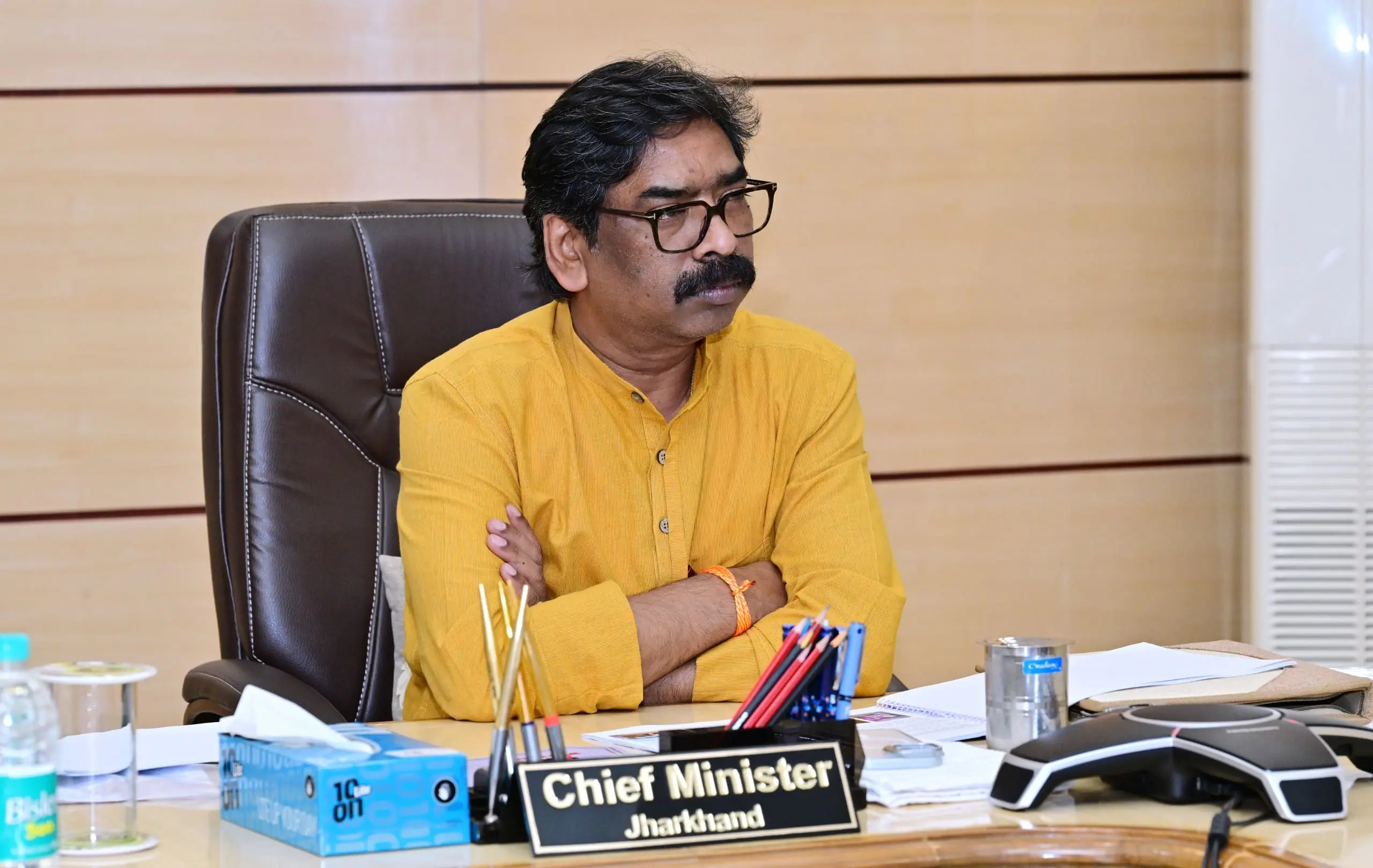
On Thursday, Chief Minister Hemant Soren signalled a push to change that reality.
During a high-level review meeting, Soren presented a broad vision for labour welfare, migration management, skill development and employment generation. He also linked these goals with the state’s long-term development strategy.
At the centre of the discussion was a clear objective. Jharkhand must create conditions that allow people to find opportunities closer to home and become economically self-reliant.
Mapping Jharkhand’s Workforce
The government has identified worker registration and tracking as an immediate priority.
Soren directed officials to update the database of unorganised, construction and migrant workers within the next three months. He asked departments to collect accurate information about workers employed in other states and abroad.
The proposed system will record worker locations, occupations and employment sectors. It will also help the government respond more effectively during emergencies.
The move reflects lessons learned during the Covid-19 pandemic. At that time, thousands of migrant workers returned home, and authorities struggled to identify and support them.
The Chief Minister also directed officials to organise registration camps and expand digital enrolment. He stressed that workers should receive welfare benefits on time.
Support Beyond Jharkhand
Migration remains a reality for many families. The government therefore plans to strengthen support systems for workers living outside the state.
Officials informed the Chief Minister that migrant assistance centres will come up in Noida, Hyderabad, Chennai, Bengaluru and Mumbai. These centres will provide guidance, support and grievance redressal services.
The government is also considering labour helplines and worker support mechanisms.
The strategy has two goals. First, it seeks to protect migrant workers. Second, it aims to reduce distress migration by creating better opportunities within Jharkhand.
From Labour Welfare to Labour Empowerment
The review meeting highlighted a shift in approach.
Instead of focusing only on welfare, the government wants to strengthen economic empowerment.
Soren said Jharkhand should move beyond its image as a labour-supplying state. He asked officials to design policies that help workers become self-reliant and financially secure.
He also directed departments to prepare plans that create sustainable livelihoods within the state. Such measures could reduce migration driven by unemployment and economic hardship.
Officials will identify labour congregation points across towns and cities. The government plans to develop these locations into labour facilitation centres with shelters and basic amenities.
These measures could bring a large section of the informal workforce into a more organised support framework.
Reimagining Skill Development
Skill development forms a key part of the government’s vision.
Soren directed officials to upgrade Industrial Training Institutes across Jharkhand. He also asked them to develop one model ITI in every district.
The Chief Minister called for institution grading, high-value agriculture courses and modern training infrastructure. He wants ITIs to adopt smart classrooms, advanced laboratories and industry-relevant equipment.
However, he stressed that training alone is not enough.
The real measure of success is employment after training.
Officials must therefore strengthen placement systems and build stronger partnerships with industry. The government is also exploring ways to involve experienced professionals and retired experts in vocational education.
The Faces Behind the Policy
The review meeting included direct interactions with trained workers.
Through video conferencing, Soren spoke with Suraj Kumar, an ITI Dhanbad graduate working in Jabalpur. Kumar informed the Chief Minister that he earns around Rs 70,000 per month.
Soren also interacted with Anima Kumari, who trained at a skill centre in Lohardaga and now works in Pune.
Their stories demonstrate how skill development can improve livelihoods. At the same time, they highlight a larger challenge. Many skilled workers still leave Jharkhand in search of opportunities.
The state’s long-term success will depend on creating similar opportunities at home.
A Broader Development Strategy
The review of the Planning and Development Department added another layer to the government’s agenda.
Soren directed officials to improve project execution, strengthen monitoring and increase budget utilisation.
He also emphasised innovative development initiatives.
Officials informed the meeting that the financial ceiling for innovative schemes has increased from Rs 2 crore to Rs 5 crore. Discussions also focused on a One District One Project model and stronger monitoring of centrally sponsored schemes.
The government is considering a long-term vision document to guide development over the next decade.
Together, these initiatives seek to connect employment generation, infrastructure creation and regional development.
The Real Test
The proposals discussed during the review meeting are ambitious.
Successive governments have spoken about labour databases, skill development, migrant welfare and local employment. The real challenge has always been implementation.
The outcome will depend on how effectively the government links skill development with industrial growth. It will also depend on its ability to create jobs, improve labour welfare and strengthen district-level planning.
Jharkhand has long exported its workforce while searching for a sustainable development model.
The government’s new roadmap aims to reverse that trend.
Whether it succeeds will determine if Jharkhand’s future is shaped by migration or by self-sustaining growth.