Healthcare access for organised sector workers is back in focus, with industry bodies pushing for expansion of services under the Employee State Insurance framework in Jharkhand.
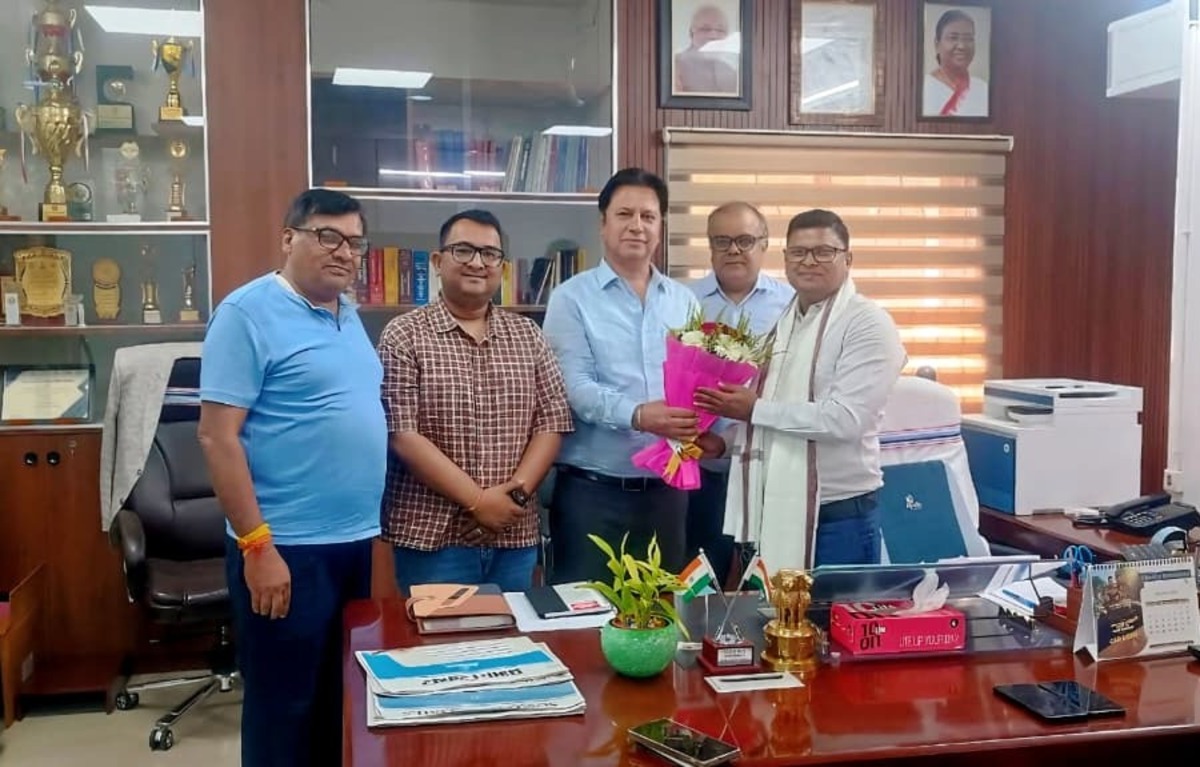
A delegation of the Federation of Jharkhand Chamber of Commerce and Industries met newly appointed Regional Director Shivendra Kumar to flag gaps in infrastructure and service delivery.
Led by Chamber President Aditya Malhotra, the delegation raised a mix of immediate service issues and long-pending structural concerns.
Expanding the ESIC footprint
The Chamber called for:
- Opening of new ESIC dispensaries
- Launch of ambulance services in major cities
- Recruitment of doctors through ESIC committees
- Expansion of branch offices
The demand reflects a broader concern.
Coverage under ESIC may exist, but access remains uneven across districts.
Bokaro hospital stuck in policy deadlock
The most critical issue raised was the delay in construction of the ESIC hospital in Bokaro.
According to the Chamber, the project has been stalled due to a land valuation dispute between the state and central governments, leaving the proposal pending for an extended period.
The Chamber indicated it will write to the Centre seeking early resolution.
This is not just a procedural delay.
It directly impacts healthcare access for insured workers in one of Jharkhand’s key industrial regions.
Service delivery vs infrastructure gap
While acknowledging that existing ESIC facilities are providing services, the Chamber flagged gaps that continue to affect beneficiaries.
“ESIC hospitals are improving healthcare access for insured workers, but expansion is necessary to meet growing demand,” Malhotra said, linking current improvements to sustained engagement between industry bodies and the Centre.
At the same time, Sub-Committee Chairman Pramod Saraswat urged people to report medical issues faced at ESIC hospitals so they can be taken up for resolution.
The structural challenge
Jharkhand’s industrial workforce depends significantly on ESIC for affordable healthcare.
Yet, three persistent gaps remain:
- Infrastructure delays in key locations like Bokaro
- Shortage of medical personnel
- Limited last-mile access, especially outside major cities
Without addressing these, coverage alone cannot ensure outcomes.
What this means for Jharkhand
The conversation signals a larger shift.
Industry bodies are no longer limiting themselves to business concerns.
They are increasingly intervening in labour welfare and healthcare delivery.
For the state, this creates both pressure and opportunity:
- Pressure to resolve pending projects
- Opportunity to strengthen worker-centric infrastructure
The larger question
Jharkhand’s growth story is tied to its workforce.
But can that workforce rely on a system that is still catching up with demand?
Until infrastructure matches coverage, ESIC will remain a promise only partially fulfilled.