Shibu Soren, the man who carried the tribal aspirations of Jharkhand from the margins of India’s democracy to the map of the Republic, passed away on August 4 at the age of 81 in New Delhi. With him ends not just a political chapter but an era in which protest, identity, and leadership converged to create the state of Jharkhand.
Born in Nemra village of Ramgarh in 1944, Soren grew up amid land alienation, bonded labour, and forest exclusion. These injustices were not abstract ideas to him; they were his lived reality. His entry into politics was less about ambition and more about survival — about giving voice to people who had none.
Widely known as Dishom Guru, Soren became a folk hero in the Santhal Pargana and beyond. In the early 1970s, he helped form the Jharkhand Mukti Morcha (JMM), a movement-turned-political-party that was as much about social assertion as it was about electoral politics. His leadership style was raw, often unpredictable, but deeply rooted in the struggles of tribal communities.
The culmination of that long fight was the creation of Jharkhand in November 2000. For the people of the region, statehood was not just an administrative milestone but the fulfilment of decades of struggle — and Soren was at its centre.
He went on to serve as Jharkhand’s Chief Minister three times, though his tenures were short and marked by political turbulence. He was also Union Coal Minister in the UPA government of 2004. Yet administration was never where he left his deepest mark. His real strength was symbolic: he represented the soul of Jharkhand’s movement, embodying its pain, hope, and resistance.
Soren’s political life was not without contradictions. While his early struggles carried a purity of purpose, his later years were often clouded by controversies and shifting alliances. But to millions of Jharkhandis, these imperfections only reinforced his identity as a leader of the people — flawed but authentic, one of their own.
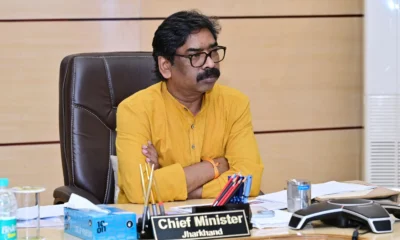
In recent years, he had largely withdrawn from active politics due to illness, while his son Hemant Soren took charge of the JMM and the state government. His younger son Basant and daughter-in-law Kalpana are also in politics, while his daughter-in-law Sita Soren is now with the BJP.
The news of his death brought a hush across Jharkhand. It was not the shock of the unexpected, but the silence of farewell. Soren had long been unwell, but his presence still anchored Jharkhand’s politics. His passing leaves behind a state that continues to grapple with the very questions he once raised — of land, dignity, and identity.
For Jharkhand, Shibu Soren will remain more than a politician. He will be remembered as the conscience of a movement, a man who turned protest into history, and whose voice will echo as long as the state he fought for endures.