Analysis
Jharkhand’s Rs1.36 Lakh Crore Dues: The Federalism Debate
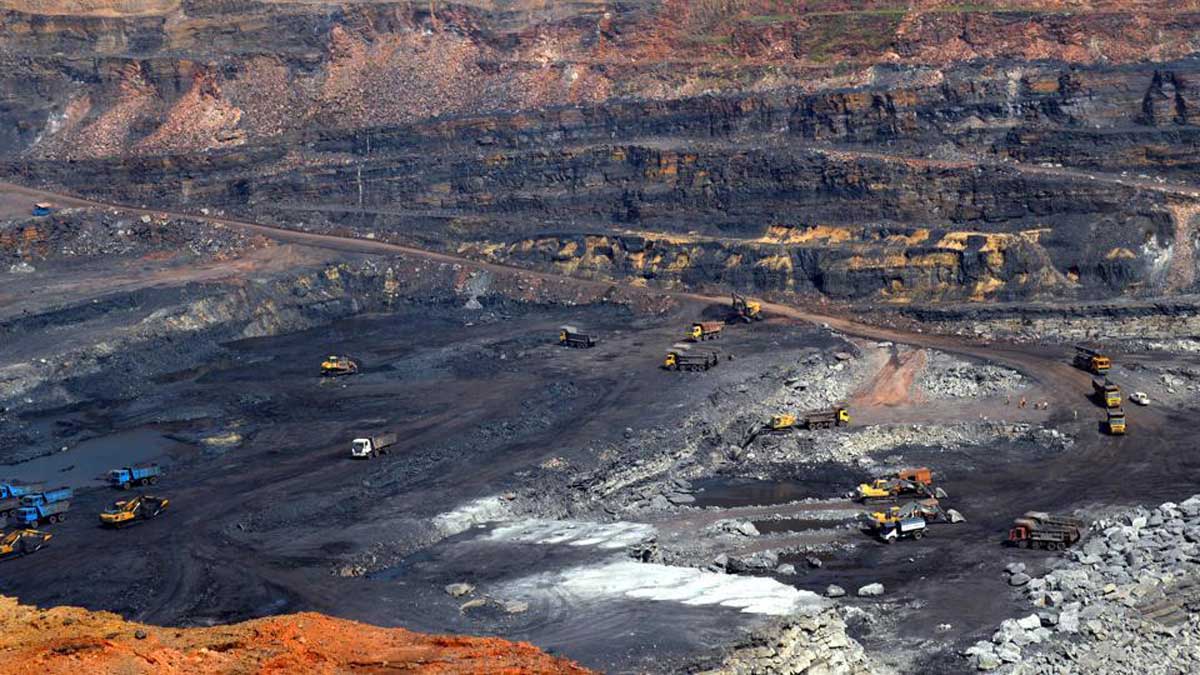
Jharkhand claims the Centre and Coal India owe it Rs1.36 lakh crore in land compensation, mining-related dues and royalties. The dispute has evolved into a larger debate over fiscal federalism, Finance Commission allocations and whether India’s resource-rich states receive a fair share of the wealth they generate.
Published
6 days agoon
By
Shashi Singh
Who Is Holding Back Jharkhand’s Fair Share? The Truth Behind the Rs1.36 Lakh Crore Dispute
India’s economic engine runs on coal, and much of that coal comes from Jharkhand.
The electricity that powers Delhi, the steel that drives manufacturing in Mumbai, and the industries that fuel India’s growth all depend heavily on the mineral wealth buried beneath Jharkhand’s soil. Yet, despite being one of the country’s richest states in natural resources, Jharkhand continues to struggle for something far more basic: its own financial dues.
On July 16, 2026, Jharkhand Chief Minister Hemant Soren once again urged the Union Coal Ministry to release the state’s pending payments. It was not a new demand. It was a reminder of a dispute that has persisted for years.
The larger question extends beyond Jharkhand. It raises a fundamental issue about India’s federal structure: are resource-rich states receiving their fair share of the wealth they generate?
The Rs1.36 lakh crore question
According to the Jharkhand government, the Centre and Coal India together owe the state approximately Rs1.36 lakh crore. This figure is not based on political rhetoric but on three major outstanding claims.
The largest component, nearly Rs1.01 lakh crore, relates to compensation for land acquired for coal mining over several decades. Vast stretches of land were acquired from the state and local communities, but compensation claims remain unresolved.
Another Rs32,000 crore arises from issues linked to the Supreme Court’s Common Cause judgment dealing with illegal mining and related financial liabilities.
The remaining Rs2,500 crore concerns royalty disputes over washed coal.
In December 2024, Jharkhand formally initiated legal proceedings to recover these dues. A joint committee comprising representatives of the Centre and the state was constituted in March 2026 to reconcile the figures. More than a year later, however, there is still no final settlement.
The dispute goes beyond unpaid money. Large tracts of mined land remain abandoned without proper restoration or transfer back to the state, creating conditions for illegal mining while depriving local communities of both economic opportunities and environmental rehabilitation.
More than a dispute over coal
Viewing this as merely a disagreement between Jharkhand and the Union government misses the larger picture.
The issue reflects a growing debate over India’s fiscal federalism, the framework governing how financial resources are shared between the Centre and the states.
Earlier this year, the Sixteenth Finance Commission submitted its recommendations for the 2026-2031 period. Several states had collectively argued that the states’ share in the divisible pool of central taxes should be increased from 41 percent to 50 percent.
The Commission chose to retain the existing 41 percent formula.
That decision disappointed many states already concerned about increasing fiscal centralisation.
However, the more significant issue lies elsewhere.
Under the Constitution, cess and surcharge collections are excluded from the divisible tax pool shared with states. These revenues remain entirely with the Union government.
As the Centre has increasingly relied on cess and surcharge over the years, a growing portion of total tax collections has effectively remained outside the sharing mechanism. Today, these levies account for roughly 23 percent of the Centre’s gross tax revenue.
The consequence is straightforward. Even if the statutory sharing percentage remains unchanged, the pool available for distribution becomes smaller.
For states dependent on central transfers, this significantly affects fiscal capacity.
The Sixteenth Finance Commission also discontinued Revenue Deficit Grants, which were designed to support financially weaker states unable to meet essential expenditure through their own revenues.
For less-developed states, this represents another source of financial pressure.
Does the formula favour richer states?
The latest Finance Commission introduced GDP contribution as one of the parameters for determining resource distribution.
On paper, rewarding economic output appears reasonable.
In practice, however, it risks reinforcing existing inequalities.
States with diversified industrial economies, large service sectors and higher levels of urbanisation naturally contribute more to national GDP.
Resource-rich states such as Jharkhand contribute enormously to India’s industrial ecosystem through coal, iron ore and other minerals. Yet much of this contribution is not fully reflected in conventional GDP metrics used for fiscal allocation.
The result is a paradox.
The state supplying the raw materials that power India’s economy continues to seek compensation for the very resources extracted from its land.
A constitutional debate, not merely a political one
The conflict is increasingly moving from political negotiations to constitutional litigation.
Kerala has approached the Supreme Court under Article 293, challenging the Union government’s control over state borrowing limits. The matter is currently before a Constitution Bench and could redefine Centre-state financial relations.
Jharkhand has similarly pursued legal avenues regarding its coal-related dues.
Recent constitutional developments have also highlighted tensions between states and the Union. In 2025, the Supreme Court clarified that Governors cannot indefinitely withhold Bills passed by state legislatures, reinforcing constitutional accountability within India’s federal system.
Taken together, these developments indicate that disputes over fiscal autonomy are becoming central constitutional questions.
Jharkhand is not alone
Jharkhand’s concerns are shared by several mineral-rich states including Odisha, Chhattisgarh and West Bengal.
Each has, at various times, argued that while they bear the environmental and social costs of mining, a disproportionate share of the economic benefits accrues elsewhere.
Mining generates enormous national wealth but also leaves behind displaced communities, environmental degradation and long-term developmental challenges.
Ironically, many of India’s richest mineral-producing states continue to rank below the national average on several human development indicators including education, healthcare and infrastructure.
Economists often describe this contradiction as the “resource curse”, where abundant natural wealth fails to translate into broad-based development because institutions and revenue-sharing mechanisms do not adequately compensate producing regions.
Why citizens should care
Fiscal disputes often appear technical, filled with constitutional provisions, tax formulas and legal terminology.
But their consequences are deeply personal.
Every rupee delayed or disputed is a rupee unavailable for schools, hospitals, roads, drinking water projects and public welfare.
If resource-producing states receive less than what they consider their legitimate share, they inevitably face tighter budgetary constraints while trying to meet growing developmental needs.
This is why the debate should not be framed as “Jharkhand versus Delhi.”
It is fundamentally about whether India’s federal model sufficiently rewards the states that supply the country’s strategic natural resources while bearing their environmental and social costs.
The road ahead
The Rs1.36 lakh crore dispute is unlikely to be resolved by political statements alone.
It requires transparent accounting, institutional dialogue and a credible mechanism for settling outstanding claims. More importantly, it calls for a broader conversation on whether India’s fiscal architecture adequately recognises the contribution of resource-producing states.
As India aspires to become a developed economy, questions of cooperative federalism cannot remain unresolved.
A nation cannot sustainably build prosperity if the regions that generate its energy and raw materials continue to feel economically disadvantaged.
The debate, therefore, is larger than Jharkhand.
It is about fairness.
It is about federalism.
And it is ultimately about whether India’s growth model can ensure that those who produce the nation’s wealth also receive a just share of its dividends.
Editor, Jharkhand Incorporation. Shashi Singh is a seasoned journalist shaped by years of reporting, storytelling, and media work across Mumbai and Jharkhand. With experience in journalism, media strategy, and content creation, he has worked across print, digital, and television formats and carries a perspective rooted in both metropolitan media ecosystems and ground realities in the heartland. Now back in Jharkhand, he is focused on building a platform that highlights the state’s economic landscape, business voices, and development ambitions. Through Jharkhand Incorporation, he aims to bring clarity, depth, and accountability to conversations around industry, entrepreneurship, policy, and growth in one of India’s most resource-rich yet underreported regions.
You may like
-
Jharkhand to Establish First Film and Television Institute with SRFTI
-
From Welfare to Enterprise: How Rs 2,500 a Month Is Helping Women Build Businesses in Koderma
-
Jharkhand Mining Debate: Mine Auctions, DMFT and Saranda at the Centre
-
Jharkhand Attracts Rs 99,639 Crore Investment Commitments at National Stakeholders’ Consultation 2026
-
Jharkhand AI Policy 2026: Rs 1,150-Cr Roadmap Targets Rs 10,000 Cr Investment
-
Jharkhand launches ‘Mines to Minds’ vision with AI and investment policies
Jharkhand to Establish First Film and Television Institute with SRFTI
Jharkhand’s Moment on the National Stage: Santhali Film Angen Wins 72nd National Film Award
From Welfare to Enterprise: How Rs 2,500 a Month Is Helping Women Build Businesses in Koderma
Palash: How Jharkhand’s Women’s Collective Became a Global Case Study
Bokaro Thermal Power Plant Shut Down, DVC Faces Heavy Costs
Toxic Profits: The Hidden Economy Behind India’s Polluted Rivers
From Welfare to Enterprise: How Rs 2,500 a Month Is Helping Women Build Businesses in Koderma
Jharkhand’s Solar Policy: Decentralised Energy in Practice