Economy & Development
Jharkhand to auction 62 closed coal mines again
Chief Minister Hemant Soren had issued directions at a June 3 review meeting; Mining Department Secretary Arava Rajkamal writes to district officials seeking action on reopening mines, illegal mining and mineral lease compliance
Published
2 weeks agoon
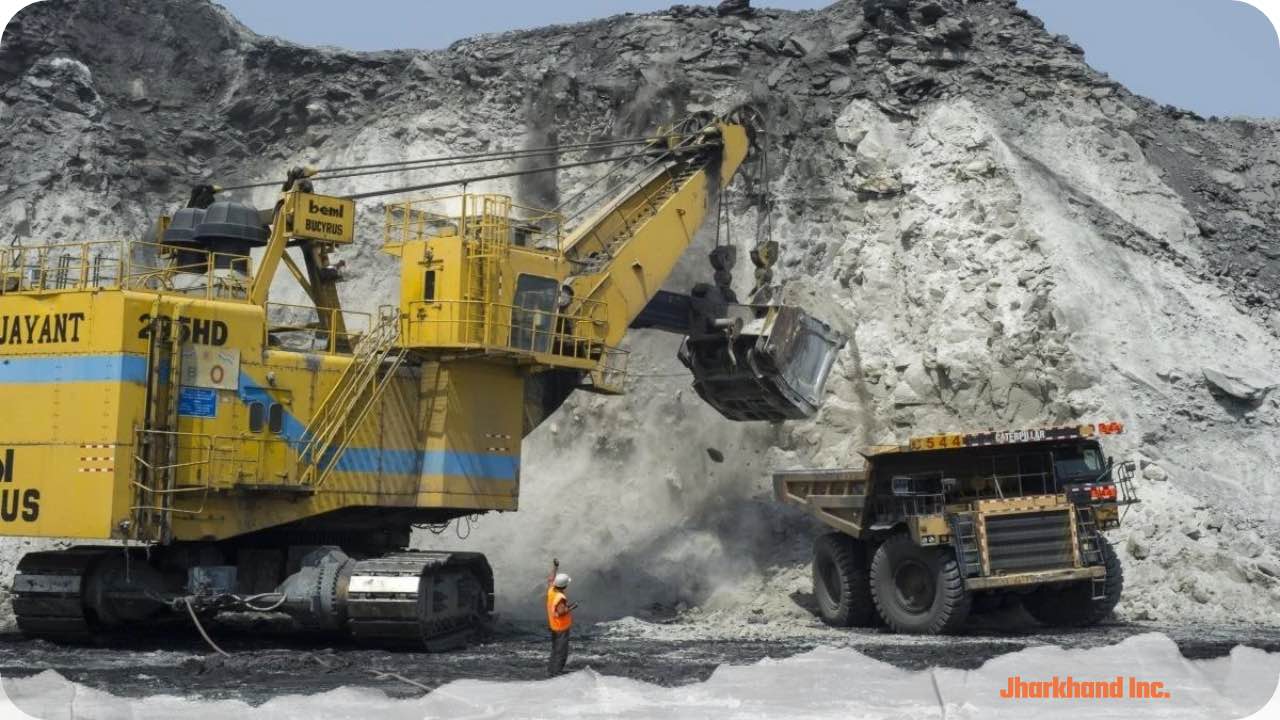
RANCHI: The Jharkhand government has initiated steps to review 62 closed coal mining leases and explore the possibility of putting them up for fresh auction, as part of a wider exercise to improve utilisation of the state’s mineral resources and curb illegal mining.
Mining and Geology Department Secretary Arava Rajkamal has written to all district deputy commissioners, superintendents of police, divisional forest officers and other concerned agencies, asking them to take action on the directions issued by Chief Minister Hemant Soren during a review meeting held on June 3, 2026.
The department has also sought compliance reports from district authorities on the measures taken to implement the directions.
The exercise covers coal mines as well as major mineral leases that have remained closed despite being allotted to mining companies. The government intends to examine the reasons for their non-operational status, review their regulatory compliance and explore fresh auction opportunities wherever legally permissible.
According to the information presented at the review meeting, around 165 coal mining leases have been allotted in Jharkhand. Of these, 103 are currently operational, while approximately 62 remain closed.
Of the 62 closed coal mining leases, 58 have been allotted to Bharat Coking Coal Limited (BCCL), Central Coalfields Limited (CCL) and Eastern Coalfields Limited (ECL). The remaining four leases are associated with SAIL, Tata Steel, Hindalco and other private mining interests.
The Chief Minister had directed the department to review the status of the closed mines and take steps for their reopening or fresh auction, depending on the circumstances and applicable provisions.
The latest communication from the department seeks to translate those directions into action at the district level.
49 closed major mineral leases also under review
The review is not limited to coal. The state government has also decided to examine the status of 49 closed major mineral mining leases covering minerals such as iron ore, bauxite, limestone, china clay, graphite, copper, uranium, kyanite, gold and manganese.
Jharkhand has around 85 allotted mining leases for these minerals. Of these, 36 are operational, while 49 remain closed.
The government has directed officials to examine why these leases have not become operational despite being allotted and, in several cases, receiving land acquisition clearances, environmental approvals and forest clearances.
Where leaseholders have failed to commence mining within the prescribed period despite obtaining the necessary statutory approvals, the department has directed that their allotments be examined for cancellation and fresh auction, in accordance with applicable rules.
The objective is to prevent valuable mineral resources from remaining unused because of delays or non-compliance by leaseholders.
The review will also examine the possibility of preparing lists of eligible mineral blocks and restarting the auction process.
Government targets illegal mining and transportation
Alongside the review of closed mines, the government has called for stronger measures against illegal mining, transportation and storage of minerals.
The June 3 meeting discussed the need to strengthen enforcement through coordination between district administrations, the police, the Forest Department and the State Pollution Control Board.
Officials were directed to make greater use of technology to monitor illegal mining and mineral transportation. The measures include installing check posts and CCTV cameras along major transportation routes to improve surveillance and prevent unauthorised movement of minerals.
The department has also emphasised the need for a modern technology-based monitoring system to identify illegal mining activities and keep track of mineral transportation.
Particular attention has been directed towards preventing illegal coal extraction and the unauthorised lifting of sand.
The government intends to strengthen monitoring mechanisms so that enforcement agencies can identify violations and take timely action.
Action on sand ghats and illegal extraction
The government has also reviewed the status of sand mining in the state.
Jharkhand has 444 identified sand ghats, of which the auction process for 300 has been completed.
The Chief Minister had directed officials to expedite the auction of the remaining sand ghats and ensure that all auctioned sites operate in accordance with the prescribed conditions.
District administrations, forest officials and pollution control authorities have been asked to coordinate in monitoring sand mining operations.
The directions also include installing check posts and CCTV cameras along major routes used for transporting sand and other minerals.
The objective is to prevent illegal extraction, unauthorised transportation and revenue losses to the state.
District administrations asked to submit compliance reports
Following the June review meeting, the Mining and Geology Department has asked deputy commissioners, police superintendents, divisional forest officers and other concerned agencies to take action within their respective jurisdictions.
The department has also sought reports on compliance with the Chief Minister’s directions.
The involvement of district administrations and police is considered important because the enforcement of mining regulations, prevention of illegal extraction and monitoring of mineral transportation require coordination among multiple agencies.
The government is also seeking to ensure that mining leaseholders fulfil their statutory obligations and that blocks which cannot be operated under existing allotments are considered for fresh allocation through the prescribed process.
The latest exercise is significant for Jharkhand, one of India’s major mineral-producing states. However, its success will depend on how quickly the government can resolve the reasons behind the closure of existing mines, enforce lease conditions and ensure that fresh auctions translate into actual mining operations.
For the state, the challenge is not merely to allocate mineral resources but to ensure that allotted mines become operational, generate economic activity and contribute to public revenue while complying with environmental and legal requirements.
You may like
-
Jharkhand Cabinet Clears College, Roads and DA Relief
-
Ulgulan 2050: One year on, Jharkhand faces a delivery test
-
Parliamentary Panel Waited Months as Jharkhand Delayed One Nation, One Election Inputs
-
Nisha Bhagat Case: Why an Impartial CBI Probe Matters
-
Jharkhand orders CBI probe into Nisha Bhagat’s death
-
Tribal activist Nisha Bhagat dies in Ranchi; death raises questions over police response and tribal land rights
Jharkhand Cabinet Clears College, Roads and DA Relief
BJP seeks Governor’s intervention in Bhushan Bara case
Ulgulan 2050: One year on, Jharkhand faces a delivery test
POCSO case against Congress MLA Bhushan Bara in Ranchi
Parliamentary Panel Waited Months as Jharkhand Delayed One Nation, One Election Inputs
Nisha Bhagat Case: Why an Impartial CBI Probe Matters
HEC employees face job uncertainty as NCLT administrator assesses assets
Jamshedpur wins national recognition in Swachh Survekshan 2025-26
Jharkhand orders CBI probe into Nisha Bhagat’s death
Teenage pregnancies rise to 11.7% in Jharkhand; rural rate nearly three times urban
Nitin Gadkari Unveils ₹2 Lakh Crore Road Plan for Jharkhand
Jharkhand power bill to rise from April 1 as JSERC hikes electricity tariff
India International Mega Trade Fair 2026 in Ranchi
Ranchi to Get Jharkhand’s Largest Mall with Integrated ISBT
Palash: How Jharkhand’s Women’s Collective Became a Global Case Study
Bokaro Thermal Power Plant Shut Down, DVC Faces Heavy Costs
Rivers on Life Support: The Poisoned Veins of Eastern India
Toxic Profits: The Hidden Economy Behind India’s Polluted Rivers
BMW Industries to Invest Rs 803 Crore in Steel Plant at Bokaro, Jharkhand
Jharkhand Tribal Cinema: From Culture to Commerce
Hemant Soren inspects under-construction road in Bokaro district
Jharkhand to host 15th All India Police Archery Championship from October 22
From Welfare to Enterprise: How Rs 2,500 a Month Is Helping Women Build Businesses in Koderma
Jharkhand’s Solar Policy: Decentralised Energy in Practice
JMM Exits Mahagathbandhan, Will Not Contest Bihar Assembly Polls
Birsa Munda’s Legacy Inspires Tribal Enterprise Push