The story beyond mining
In Jharkhand’s coal belt, development has traditionally been measured in extraction. Now, Central Coalfields Limited is attempting to redefine that equation.
Its CSR push in FY 2025–26 goes beyond compliance. It signals a structural shift in how a mining PSU positions itself, moving from resource extraction to community-centred development across some of the state’s most vulnerable districts.
The scale is significant. The intent is strategic.
Health as the first layer of impact
Public health remains one of Jharkhand’s deepest structural gaps. CCL’s interventions are targeting this space with scale-driven models.
A ₹15.09 crore centralised kitchen in Ramgarh, built with Akshaya Patra Foundation, is designed to serve 50,000 children daily, addressing malnutrition in a systemic way.
Under the Nikshay Mitra initiative, over 5,000 tuberculosis patients in Chatra and Latehar are receiving both treatment and nutritional support.
Early intervention is also visible. A cardiac screening programme has already covered nearly 40,000 schoolchildren, with surgeries fully funded.
This is not episodic CSR. It is the creation of preventive health infrastructure through corporate funding.
Education to employment: bridging the aspiration gap
Jharkhand’s education landscape is shaped by first-generation learners. Access remains the biggest barrier.
CCL’s ₹65 crore modern library project in Ranchi aims to build long-term intellectual infrastructure. Alongside, targeted coaching programmes for underprivileged students have produced 200+ engineering entrants, each supported financially.
The approach is outcome-driven:
Identify talent. Enable access. Track results.
Livelihoods: where CSR meets economics
The real test of CSR is income generation.
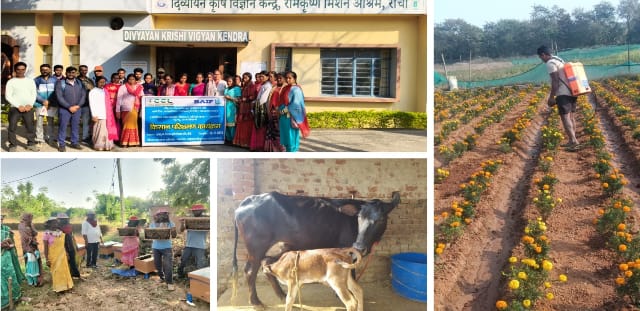
In Hazaribagh, an integrated rural development model across nine villages is targeting around 5,000 families. By combining agriculture, livestock and micro-enterprises, the programme aims to increase annual incomes by ₹20,000 to ₹50,000 per household.
Skill development programmes linked directly to job placements show high absorption rates, with salaries ranging from ₹12,000 to ₹33,000.
This is where CSR shifts from visibility to economic impact.
Sports, environment and ecosystem thinking
CCL’s support to JSSPS Sports Academy reflects long-term investment in human capital. With 200+ athletes under training, largely from SC/ST/OBC backgrounds, the programme is creating pathways to national-level exposure.
On the environmental side, initiatives like animal shelters and mobile veterinary services signal a broader attempt to integrate social and ecological responsibility.
What this means for Jharkhand
Jharkhand’s mining economy has always carried a contradiction. Resource-rich districts remain development-poor.
CCL’s CSR model, if sustained and independently validated, offers a potential bridge.
Three clear shifts emerge:
- Scale: Moving beyond token CSR to district-level interventions
- Integration: Linking health, education and livelihoods
- Measurability: Backing claims with data and outcomes
Yet, critical questions remain:
- Can these gains sustain beyond CSR funding cycles?
- Is there independent third-party validation?
- Can this model be replicated across other PSUs in Jharkhand?
The larger transition
A quiet transition is underway.
From coal as an economic engine
to communities as development stakeholders
If this shift holds, CSR will move beyond compliance. It will evolve into a parallel development architecture.
For Jharkhand, that could redefine what growth actually means.










🏧 The balance is 36,886.99 USD. Next ➸➸ graph.org/your-balance-04-15?hs=f1b5a9d5616eb676deecaf5290e2cf5b& 🏧
April 27, 2026 3:56 am at 3:56 am
yn6bl0