

Policy & Governance
Jharkhand Becomes Case Study for National Security and Strategic Studies Programme
A 17-member National Defence College delegation, including foreign officers, is studying Jharkhand as a case study under its National Security and Strategic Studies programme.


Jharkhand has emerged as a key case study under the National Defence College’s National Security and Strategic Studies programme, with a 17-member delegation of senior Indian and international military officers currently undertaking a structured study tour of the state to examine its security, governance and development challenges.
The delegation, led by Major General Hartej Singh Bajaj, includes 10 Indian officers and five international course members from Brazil, Bangladesh, Japan, France and Ethiopia. As part of the ongoing visit, the delegation met Chief Minister Hemant Soren on Tuesday and discussed Jharkhand’s socio-political environment, law and order framework and development priorities.

Officials said the study focuses on understanding how internal security concerns intersect with industrial growth, mining activity and social dynamics in a state that has historically faced Left Wing Extremism and governance challenges in remote regions.
This marks the third visit of a National Defence College delegation to Jharkhand in recent years, following similar tours in 2020 and 2023. The repeated engagement highlights the growing importance of Jharkhand as a reference point for policy-oriented strategic learning related to internal security and development-led stability.
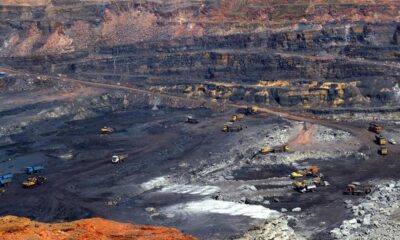
During the tour, the officers are scheduled to visit coal mining areas in Dhanbad and the industrial hub of Jamshedpur to gain first-hand exposure to issues related to law and order, labour relations, infrastructure and the socio-economic impact of industrialisation. Interactions with district officials, police authorities and other stakeholders form an essential part of the field-based assessment.
Sources said findings from the Jharkhand visit would be integrated into academic and strategic discussions at the National Defence College, contributing to future thinking on internal security doctrine, civil-military coordination and governance mechanisms in conflict-sensitive and industrial regions.
The participation of international officers has added a comparative global dimension to the study programme. Foreign course members are examining India’s approach to balancing democratic governance with security management and development objectives, strengthening defence diplomacy and strategic exchange.
Beyond strategic analysis, the visit also provides officers with exposure to ground realities in mining and industrial belts where livelihoods, displacement, policing and development intersect. These field observations are expected to inform broader debates on inclusive growth as a long-term component of security policy.
Officials said the delegation’s interaction with the Chief Minister underscored the importance of cooperative federalism and integrated policy planning in addressing complex security challenges through sustained development initiatives.
The study tour will continue till February 6, after which the delegation will submit its assessments as part of the National Defence College academic programme. Jharkhand’s experience, shaped by its unique socio-political and economic landscape, is expected to contribute meaningfully to future national discussions on internal security and strategic governance.









Jharkhand lays foundation for film talent pipeline with SRFTI partnership

Jharkhand to Establish First Film and Television Institute with SRFTI

Jharkhand’s Moment on the National Stage: Santhali Film Angen Wins 72nd National Film Award

Palash: How Jharkhand’s Women’s Collective Became a Global Case Study

India International Mega Trade Fair 2026 in Ranchi

Bokaro Thermal Power Plant Shut Down, DVC Faces Heavy Costs

From Welfare to Enterprise: How Rs 2,500 a Month Is Helping Women Build Businesses in Koderma

Jharkhand’s Solar Policy: Decentralised Energy in Practice
