


Campus
Jharkhand’s Aviation Bet Takes Off
Jharkhand launches CPL training in Dumka, but Rs 35.81 lakh cost raises questions on access, equity and real impact.

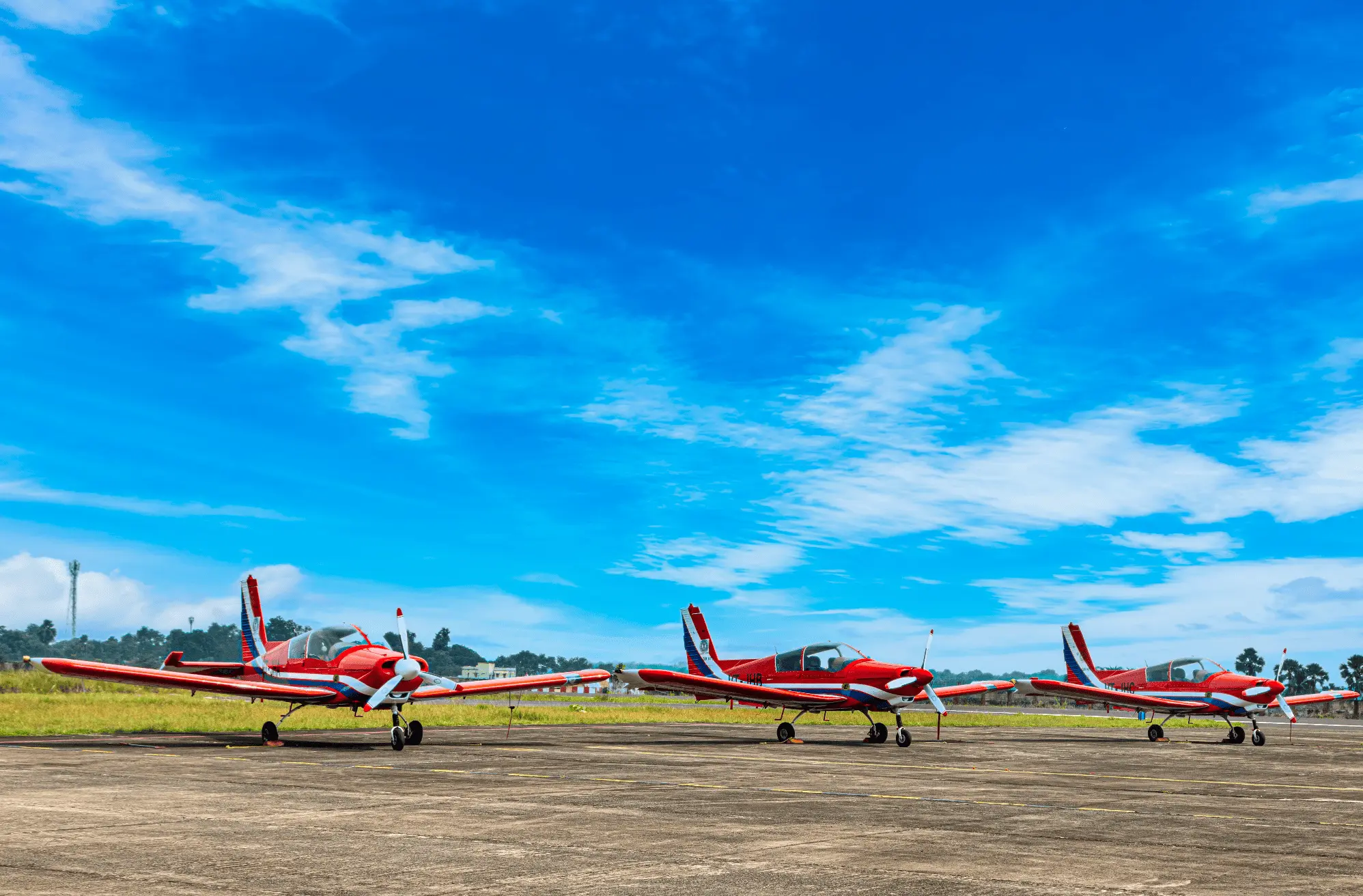
From Dumka to the Sky: Jharkhand’s Aviation Bet Raises Big Questions on Access and Impact
In a state long defined by mines and migration, Jharkhand is now aiming for the skies.
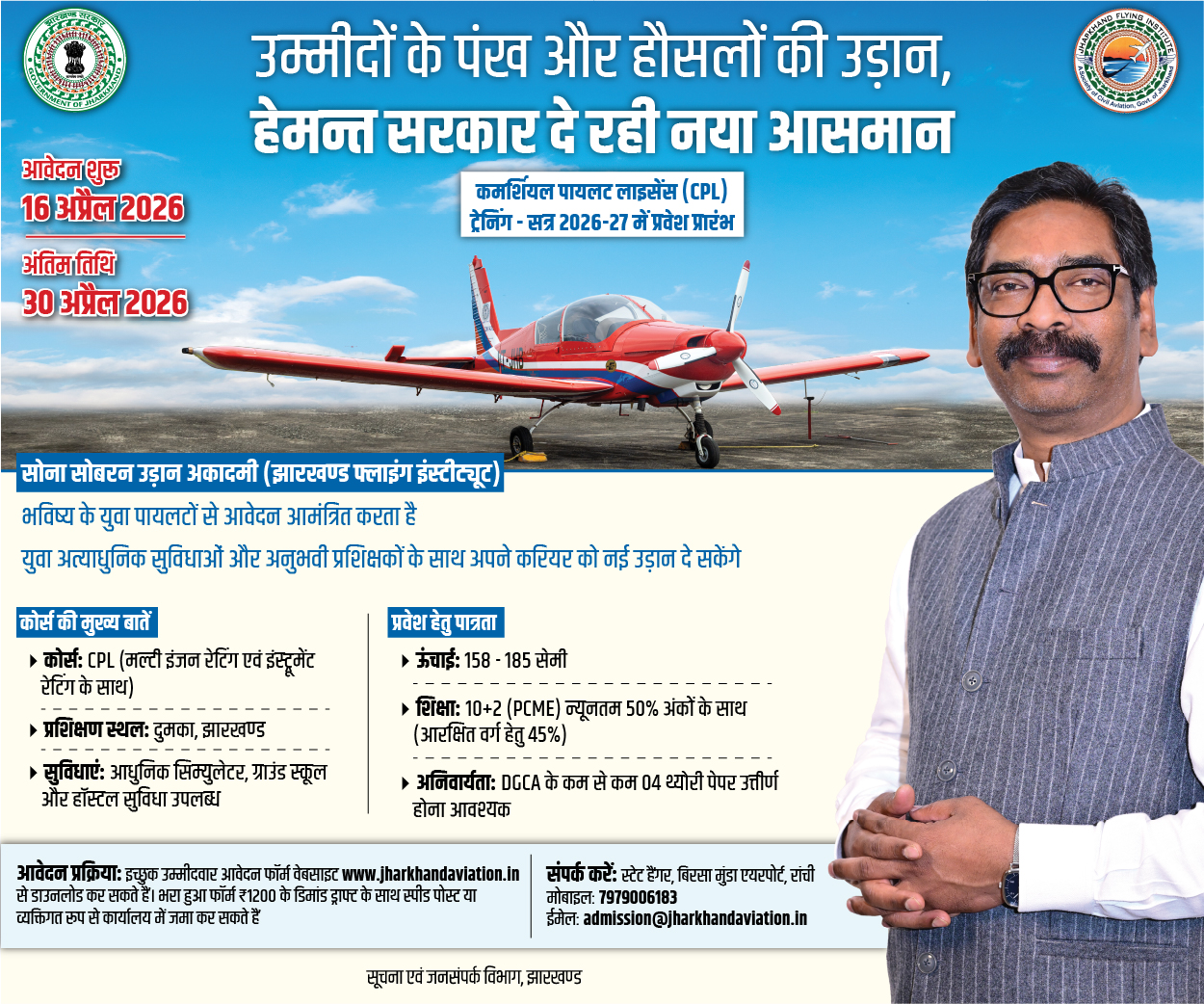
The launch of Commercial Pilot License (CPL) training at the Jharkhand Flying Institute in Dumka marks an ambitious shift. Positioned under the Sona Sobran Udan Academy, the initiative signals Jharkhand’s entry into India’s high-value aviation training ecosystem.
On paper, it looks transformative.
In reality, it raises deeper questions.
A new sector, a new narrative
The institute, operating from Dumka Airport in Santhal Pargana, has received regulatory backing to conduct full-scale pilot training, including CPL programmes.
According to official approval, the institute is authorised to train pilots across multiple license levels, including commercial and airline transport pathways, with validity extending till 2030 .
Aircraft are already listed under the training infrastructure, signalling that this is not just an announcement but a functional setup.
For Jharkhand, this is a departure.
From coal belts to cockpit training, the state is attempting to reposition its skill narrative.
The cost barrier: Who is this really for?
The ambition, however, collides with economics.
- Training cost: Rs 35.81 lakh
- Seats in first phase: 15
This is where the story shifts.
Jharkhand is not a high-income state. A majority of its youth still struggle with access to basic higher education, let alone high-cost professional training.
So the obvious question:
Who can afford this?
Is this a platform for Jharkhand’s youth
or a premium training hub open to those who already have financial access?
The policy remains silent on:
- Scholarships
- State subsidies
- Financial inclusion mechanisms
Without these, the risk is clear.
A public institution may end up serving a narrow, privileged segment.
Why Dumka: Strategy or symbolism?
The location is not incidental.
Dumka, part of Santhal Pargana, has historically remained outside Jharkhand’s core development grid. Setting up an aviation academy here signals an attempt at regional balancing.
But infrastructure alone does not create an ecosystem.
Key questions remain:
- Is Dumka ready to support an aviation cluster?
- Are there enough trainers, maintenance systems and industry linkages?
- Will this generate local employment beyond training seats?
If not, the project risks becoming an isolated island of investment.
Aviation push or policy experiment?
India’s aviation sector is expanding rapidly, with rising demand for trained pilots.
Jharkhand’s entry into this space could be timely.
The institute’s structure reflects a serious framework:
- DGCA-aligned curriculum and licensing pathway
- Simulator and flight training components
- Defined eligibility, medical and academic requirements
This is not symbolic skilling. It is high-regulation, high-investment training.
But that also means high stakes.
Without strong placement pipelines and industry integration, training alone will not translate into employment.
The contradiction at the core
This initiative sits at the intersection of two realities:
- A state trying to build a future-facing skill economy
- A population still navigating basic income and access constraints
That contradiction cannot be ignored.
If designed inclusively, this could become a breakthrough model.
If not, it risks becoming a headline without depth.
What this means for Jharkhand
Three possible pathways emerge:
- Optimistic: Jharkhand becomes an eastern aviation training hub
- Practical: A limited, niche training centre with moderate impact
- Pessimistic: High-cost infrastructure with low local participation
The outcome will depend on one factor:
Access.
The larger question
Jharkhand has taken a bold step.
But bold policy is only half the story.
The real test lies ahead:
- Will local youth enter this system?
- Will affordability barriers be addressed?
- Will Dumka evolve into an ecosystem, not just a location?
Because in the end, this is not just about flying.
It is about who gets to take off.



Jharkhand pushes innovation agenda

Ranchi turns vertical


