


Policy & Governance
Sand prices triple in Jharkhand as 229 ghats stay shut over lease delays
Sand prices in Jharkhand surge to Rs 7,000 as lease delays halt supply, exposing policy gaps and boosting illegal mining.

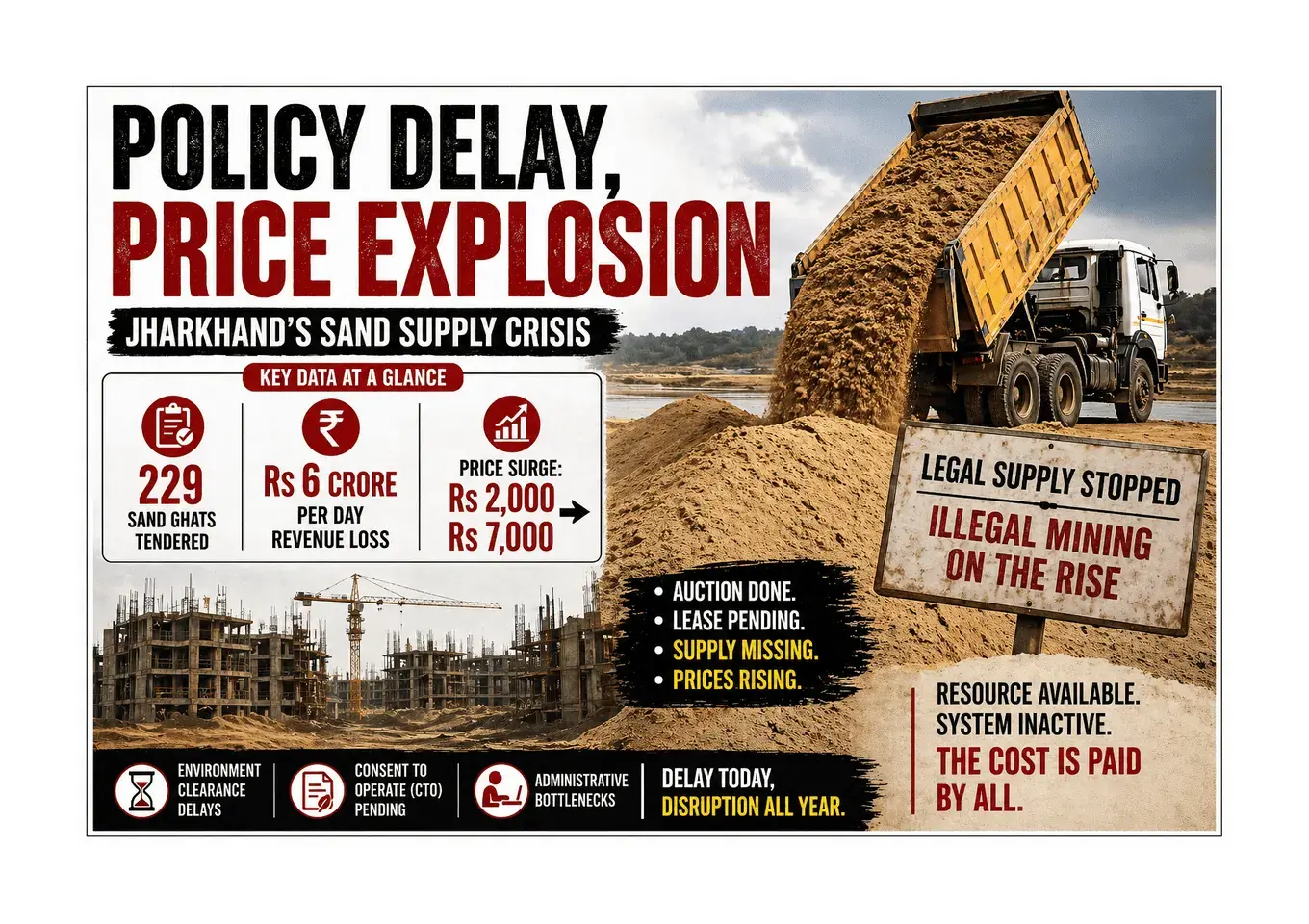
Supply squeeze fuels illegal mining; state losing ~Rs 6 crore daily in royalties
A breakdown in last-mile execution of mining leases has triggered a sharp supply shock in Jharkhand’s sand market, pushing prices up nearly threefold and opening the door to illegal extraction, according to officials and market participants.
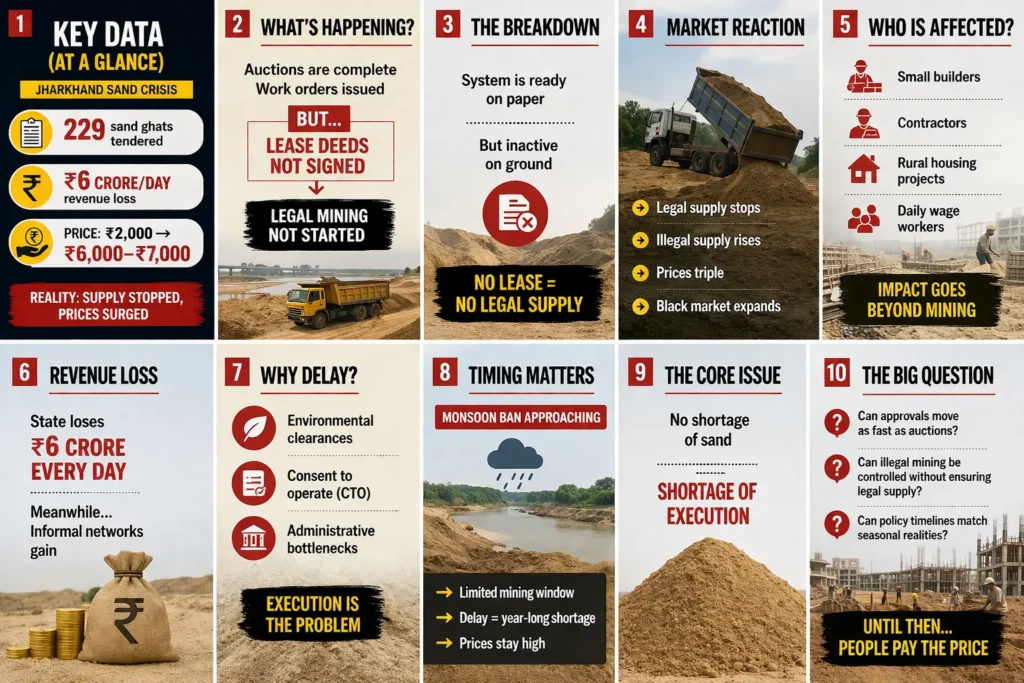
Despite the tendering of 229 sand ghats across multiple districts, operations have not commenced as lease deeds remain pending. The resulting shortage has driven prices from Rs 2,000–Rs 2,500 per unit to Rs 6,000–Rs 7,000 in several regions, raising input costs for construction and stalling projects on the ground.
The disruption comes at the peak of the construction season and is beginning to ripple through both private real estate activity and public works, including housing schemes. Contractors say erratic supply and price volatility are forcing project recalibrations and, in some cases, temporary halts.
Execution gap after allocation
Industry participants point to a familiar bottleneck: while auctions have been completed and work orders issued in several cases, the conversion of allocations into operational sites has been delayed by procedural steps, including environmental clearances and documentation linked to lease execution.
Officials in the mining department acknowledge the lag and say instructions have been issued to expedite lease deed formalities. “District-level coordination and statutory approvals are taking time. Efforts are on to fast-track the process so that supply normalises,” a senior official said.
Prices spike, informal supply expands
With legal supply constrained, the market has tilted towards informal channels. Transporters and local traders indicate that illegal mining has picked up to bridge the gap, with material being sold at elevated prices in open markets.
The price escalation, up to three times in some pockets, has a direct bearing on construction costs, particularly for small contractors and rural housing works where margins are thin and procurement is largely spot-based.
Revenue leakage mounts
The state is also bearing the fiscal cost of the disruption. Officials estimate that Jharkhand is losing around Rs 6 crore per day in royalty as allocated ghats remain non-operational. The leakage is effectively being captured by unregulated operators in the parallel market.
From a policy standpoint, the episode underscores a structural issue in mineral administration: efficiency gains at the auction stage are not translating into timely production. The gap between allocation and execution continues to create cyclical shortages, price spikes and enforcement challenges.
Ground impact and outlook
On the ground, builders report delays in material availability and unpredictable pricing, complicating project timelines. Public works departments are also facing cost pressures, which could translate into revised estimates if the disruption persists.
Officials expect some easing once lease deeds are executed and ghats become operational, though timelines remain uncertain. In the interim, the government is likely to tighten enforcement against illegal mining even as it pushes for administrative clearances to restore legal supply.
Until then, Jharkhand’s sand market is set to remain tight, with elevated prices and continued revenue loss weighing on both consumers and the state exchequer.




Jharkhand pushes innovation agenda

Ranchi turns vertical


