

Economy & Development
RERA Bihar’s Ranchi Outreach
A Quiet Pitch for Trust, Investment, and Regulatory Credibility. A cross-border engagement with Jharkhand builders signals Bihar’s attempt to reshape its real estate narrative through transparency, speed, and institutional confidence

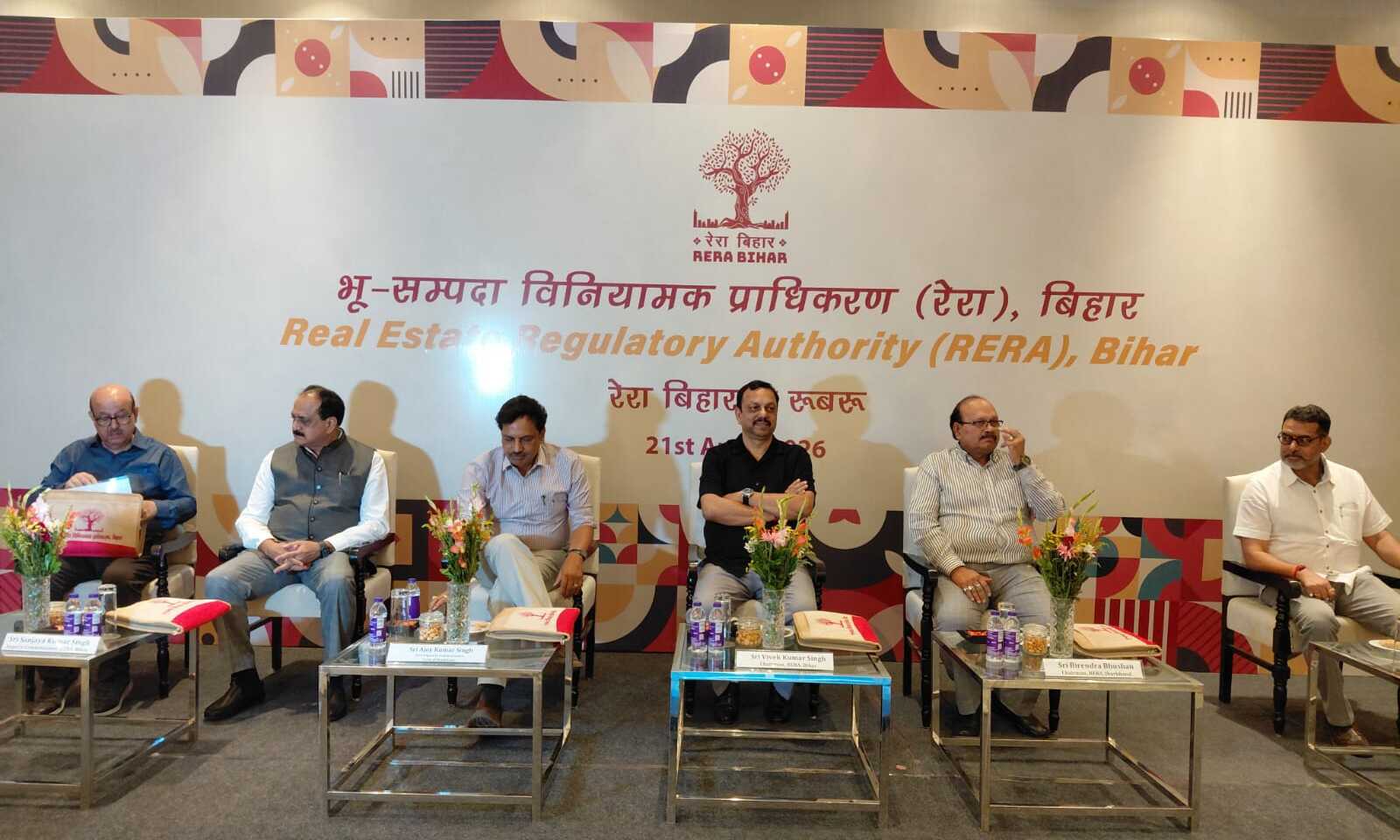
RERA Bihar’s Ranchi Outreach: A Quiet Pitch for Trust, Investment, and Regulatory Credibility
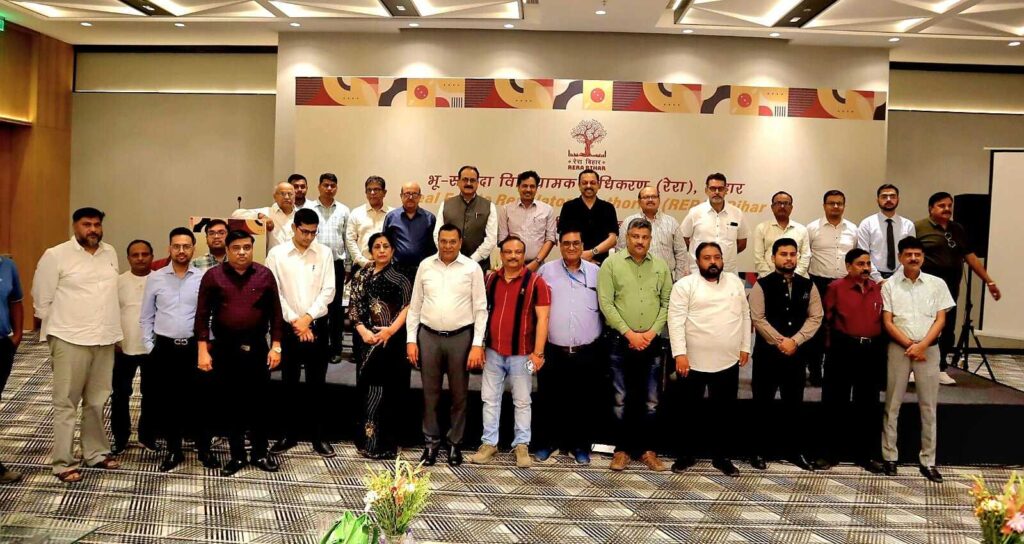
In Ranchi, far from its administrative headquarters in Patna, Bihar’s real estate regulator made a deliberate move. The event, titled ‘RERA Bihar Se Rubaru’, may appear on the surface as a routine awareness programme, but its intent runs deeper. It signals a shift in how states are beginning to position themselves in India’s evolving real estate landscape.
At the centre of this outreach was a simple proposition. Bihar is open for investment, but on defined rules. It wants developers, but within a system that promises transparency, faster processes, and protection for homebuyers. The message was directed as much to Jharkhand’s builders as it was to investors and buyers who move between the two states.
A Strategic Location, A Calculated Move
The choice of Ranchi was not incidental. Jharkhand’s capital has emerged as a growing hub for mid-scale real estate developers, many of whom operate across state borders. There is also a significant population with roots in Bihar, creating a natural investment corridor between the two regions.
By bringing its outreach programme to Ranchi, RERA Bihar is effectively tapping into this shared economic and demographic space. It is reaching out to developers who understand regional demand patterns and to buyers who often look beyond state boundaries when making property decisions.
This is less about awareness and more about market positioning.
Balancing Ease with Enforcement
During the event, RERA Bihar Chairman Vivek Kumar Singh framed the regulator’s approach in clear terms. The authority, he said, is committed to making processes easier for developers while ensuring strict compliance with the law.
One of the key ideas presented was the introduction of a filtering mechanism in project registration. The intent is straightforward. If a promoter submits complete and correct documentation, approvals should not be delayed. This reduces friction for genuine developers without compromising regulatory standards.
At the same time, the emphasis on compliance remains firm. The message is not one of relaxation, but of efficiency. The system is designed to reward preparedness and penalise deviations.
This balance between facilitation and enforcement lies at the heart of Bihar’s pitch.
Rebuilding Trust in a Fragile Sector
Real estate across India, particularly in eastern states, has struggled with a persistent trust deficit. Delays, lack of transparency, and weak grievance mechanisms have shaped buyer perception for years.
RERA as a framework was introduced to correct this imbalance. What Bihar is attempting now is to demonstrate that the framework can work in practice.
The initiatives highlighted during the outreach reflect this intent. Homebuyers are being given access to quarterly project updates through mobile platforms. Regulatory oversight is being strengthened through technology, including the use of satellite imagery to identify violations. Grievance redressal mechanisms are being streamlined to ensure quicker resolution.
Taken together, these measures aim to shift the relationship between buyer and builder. The idea is to move from uncertainty to accountability.
Institutional Signals from Jharkhand
The presence of senior Jharkhand officials added weight to the event. Development Commissioner Ajay Kumar Singh acknowledged the importance of such regulatory efforts, suggesting that similar approaches could strengthen Jharkhand’s own framework.
Jharkhand RERA Chairman Birendra Bhushan also indicated that the initiatives presented by Bihar offer valuable lessons. His remarks point towards a broader possibility. Regulatory practices are no longer confined within state boundaries. They are being observed, compared, and in some cases, adapted.
This creates a subtle form of policy competition. States are not just implementing regulations. They are showcasing them.
The Bihar – Jharkhand Investment Corridor
There is a deeper economic story beneath the surface. A significant number of people from Bihar live and work in Jharkhand. Many of them continue to invest in property back home. At the same time, developers based in Jharkhand are increasingly exploring opportunities in Bihar, drawn by lower land costs and expanding urban centres.
RERA Bihar’s outreach is designed to strengthen this two-way flow. By providing clarity on regulations and highlighting ease of doing business, it is attempting to reduce hesitation among developers and buyers alike.
In effect, the regulator is positioning Bihar not just as a market, but as a system that works.
Beyond Outreach: Structural Reforms
What lends credibility to this effort is that it is backed by institutional changes. The outreach is not a standalone exercise.
Among the key initiatives highlighted were:
- Use of satellite technology to identify unregistered or illegal projects
- Establishment of mediation platforms for faster dispute resolution
- Training programmes for real estate agents to improve compliance
- Advisory services to assist promoters during the registration process
These measures indicate a shift towards a more proactive regulatory model. Instead of reacting to violations, the system is being designed to prevent them.
Empowering the Homebuyer
For homebuyers, especially those investing from outside Bihar, the messaging is clear. Verification is essential. RERA registration is not a formality but a safeguard.
The emphasis on digital access to project information, regular progress updates, and structured grievance mechanisms is meant to give buyers greater control over their investment decisions.
In a sector where information has traditionally been uneven, this represents a significant change. It reduces dependency on intermediaries and places the buyer closer to the source of truth.
A Shift in Governance Thinking
The Ranchi outreach reflects a broader transformation in governance. Regulators are no longer limited to oversight. They are becoming active participants in shaping market behaviour.
By stepping into another state to present its model, RERA Bihar is doing more than promoting awareness. It is building a narrative. A narrative that positions regulation not as a barrier, but as an enabler of growth.
This is where the idea of competitive federalism becomes visible. States are competing not only through incentives but through governance quality. The ability to deliver transparency, speed, and accountability is emerging as a key differentiator.
The Road Ahead
Whether this outreach translates into increased investment will depend on multiple factors. Developers will look at land availability, demand patterns, and project viability. Buyers will assess price, location, and long-term value.
But one element remains central. Trust.
If Bihar’s regulatory framework succeeds in building and sustaining that trust, it can alter the trajectory of its real estate sector. It can attract developers who are willing to operate within a structured system and buyers who feel secure in their investments.
Finally
The Ranchi event may not carry the scale of a policy announcement or the immediacy of a political headline. Yet, it marks an important moment. It reflects a state stepping out to assert confidence in its own system.
In doing so, it raises a larger question. As states begin to compete on governance standards, will this translate into better outcomes for the sector?
For developers, it opens new possibilities.
For buyers, it offers a measure of reassurance.
For policymakers, it sets a benchmark.
And for the real estate market in eastern India, it signals that the rules of the game are quietly changing.












Ranchi hosts 15th All India Police Archery Championship

Governor inaugurates Swarnim Bharat Expo 2026 in Ranchi

PG admissions: Ranchi University and DSPMU differ on academic score calculation

Jharkhand Police honours 154 personnel who died in line of duty

Hemant Soren inspects under-construction road in Bokaro district

JIIDCO plans 25,000-sq-ft logistics and warehouse facility in Ranchi

Jharkhand to host 15th All India Police Archery Championship from October 22

Jharkhand HC hears BSL blockade plea; all 11 gates reopen

Kolkata Durga Puja stampede kills 19; Jharkhand leaders express grief

BSL jobs deadlock: Minister Radha Krishna Kishore joins protest

Jharkhand power bill to rise from April 1 as JSERC hikes electricity tariff

India International Mega Trade Fair 2026 in Ranchi

Nitin Gadkari Unveils ₹2 Lakh Crore Road Plan for Jharkhand

Ranchi to Get Jharkhand’s Largest Mall with Integrated ISBT

Palash: How Jharkhand’s Women’s Collective Became a Global Case Study

Bokaro Thermal Power Plant Shut Down, DVC Faces Heavy Costs

Toxic Profits: The Hidden Economy Behind India’s Polluted Rivers

Rivers on Life Support: The Poisoned Veins of Eastern India

BMW Industries to Invest Rs 803 Crore in Steel Plant at Bokaro, Jharkhand

Jharkhand Tribal Cinema: From Culture to Commerce
Hemant Soren inspects under-construction road in Bokaro district
Jharkhand to host 15th All India Police Archery Championship from October 22

From Welfare to Enterprise: How Rs 2,500 a Month Is Helping Women Build Businesses in Koderma

Jharkhand’s Solar Policy: Decentralised Energy in Practice

JMM Exits Mahagathbandhan, Will Not Contest Bihar Assembly Polls

Birsa Munda’s Legacy Inspires Tribal Enterprise Push
