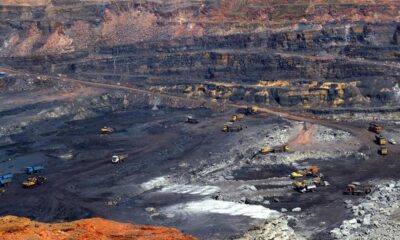
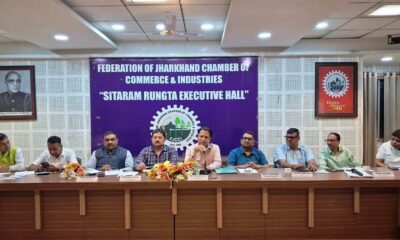
Jharkhand, long known as India’s coal capital, is now at the center of a global race for critical minerals that are essential for the clean energy transition. The 29th meeting of the Jharkhand State Geological Programming Board, chaired by Mines Secretary Arawa Rajkamal, highlighted how the state is preparing for the next phase of mineral-led development that could redefine its economic geography and global partnerships.
U.S. Interest in Jharkhand’s Exploration Effort
Mines Secretary Arawa Rajkamal said that the United States has expressed interest in becoming a partner in Jharkhand’s ongoing search for critical minerals. The move aligns with the broader India–U.S. cooperation under the Critical Minerals Partnership, which aims to ensure secure and diversified global supply chains for lithium, cobalt, nickel, and rare earth elements.
This foreign interest marks a new phase for Jharkhand’s mining sector, which has traditionally been dominated by domestic players and conventional minerals.
From Iron to Lithium: A Shift in Jharkhand’s Mining Map
Jharkhand’s mineral identity has largely revolved around coal, iron ore, and bauxite. Now, exploration teams are uncovering deposits of high-value critical minerals such as lithium, cobalt, nickel, graphite, and rare earth elements. These materials are vital for electric vehicles, batteries, semiconductors, and renewable energy storage systems.
The Department of Mines and Geology, in coordination with the Geological Survey of India and CMPDI, is mapping these resources with advanced methods that offer greater precision and lower environmental impact.
45 Blocks Under Exploration
According to department officials, exploration work is underway in 45 mineral blocks across Jharkhand. These include potential sites for nickel, chromium, bauxite, and lithium.
Work has reached advanced stages in 44 blocks, with testing and sampling being carried out under the supervision of the State Directorate of Geology. The government plans to bring these blocks to the auction stage within the next financial year, creating opportunities for both public and private investors.
Economic and Industrial Potential
Experts believe that successful identification and commercial extraction of these minerals could transform Jharkhand’s industrial profile. Beyond export potential, the state could emerge as a manufacturing base for components like batteries, solar panels, and electronic equipment.
Such diversification would help Jharkhand reduce its dependence on coal and heavy metals and create new value chains and employment in technology-driven sectors.
CMPDI Leads Technology Adoption
The Central Mine Planning and Design Institute (CMPDI) has started using new technology for mineral exploration. CMPDI Chairman and Managing Director P.M. Prasad said that the institute has adopted tools such as remote sensing, geospatial data analytics, and advanced drilling techniques to identify and analyze sub-surface deposits.
He said that the approach combines scientific accuracy with sustainability and can significantly reduce exploration costs and timelines.
Reviving Old Belts with New Value
The Jharkhand government is also focusing on reviving old mining belts that may still hold economically viable deposits. Regions such as Singhbhum, Dhanbad, Bokaro, and Santhal Pargana are being reassessed using updated geological data and modern equipment.
Officials said several of these older sites could yield secondary mineral value, especially in the form of trace metals used in renewable and high-tech industries.
Policy and Institutional Reforms
The Geological Programming Board meeting also reviewed the state’s policy direction for exploration and licensing. Emphasis was placed on scientific mapping, transparent auctions, and alignment with central government frameworks.
The state is also working to integrate academic and institutional research, particularly from IIT (ISM) Dhanbad, into mineral exploration and technology innovation.
Environmental and Local Impact
The government has indicated that future exploration and extraction will follow sustainable mining standards. This includes community consultation, rehabilitation plans, and monitoring of ecological balance.
Officials emphasized that local employment generation, skill development, and infrastructure support will remain key components of all upcoming exploration projects.
Global Relevance
As the world transitions toward clean energy and digital infrastructure, the demand for critical minerals is expected to rise sharply. With the United States, the United Kingdom, and other partners showing strategic interest, Jharkhand could play a key role in India’s ambition to secure its place in global supply chains.
For Jharkhand, this represents not just a mining opportunity but also a chance to establish itself as a leader in sustainable resource management and green industrial growth.