The Jharkhand Cabinet, chaired by Chief Minister Hemant Soren, on Monday approved a sweeping set of decisions that together signal a strong pivot toward infrastructure expansion, rural cash flow generation, power sector strengthening and institutional reforms across education, health, tourism and finance.
With road, flyover and bridge projects alone crossing Rs 800 crore, and fresh land leases cleared for coal mining by NTPC for 30 years, the government’s policy thrust is expected to generate a ripple effect across construction, logistics, real estate, steel and cement markets.
Infrastructure Boom Sets the Pace
The biggest capital push came in urban and highway mobility. The Cabinet cleared a revised administrative approval of Rs 470.12 crore for the four-lane flyover and elevated road-cum-ROB from Siramtoli Chowk to Mecon Roundabout in Ranchi, a long-pending choke point for the city’s traffic.
Large highway upgrades were also sanctioned in:
- Godda district with Rs 127.54 crore for the Ghatbanka–Devdand road corridor.
- Sahibganj district with Rs 61.57 crore for the Dighdi Mod–Malin Risoud stretch.
- Gumla district with Rs 140.51 crore for the Bankutoli–Kurkura–Bano widening project.
- Palamu with Rs 64.06 crore for a high-level bridge over the North Koel river between Daltonganj and Chainpur.
For the construction industry, this translates into sustained EPC activity, higher demand for aggregates, steel and cement, and steady work for transporters and local contractors over the next three years.
Coal Leasing Strengthens Power Economy
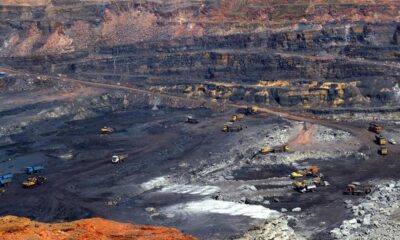
In a decisive boost to the energy sector, the Cabinet approved two major land leases in Barkagaon, Hazaribag for the Badam coal mining project in favor of NTPC for 30 years. Nearly 94 acres of land will now support long-term coal extraction.
The move is expected to enhance security of fuel supply for thermal plants, improve power generation stability and generate employment across mining, logistics and ancillary services. At the same time, it is likely to intensify the environment-versus-development debate in the coal belt.
Education Sector Gets Fresh Capital Infusion
Higher education infrastructure also received a significant push. Two new degree colleges were approved:
- Balumath, Latehar under Nilamber Pitamber University, with an outlay of Rs 38.82 crore.
- Simaria, Chatra under Vinoba Bhave University, with Rs 34.62 crore.
Additionally, the Cabinet cleared the restructuring of academic and non-academic posts across Ranchi University and its constituent colleges. Education-linked businesses such as hostels, coaching centres, stationery suppliers and rental housing are expected to benefit in these semi-urban pockets.
Farm Economy Boost Through MSP and Bonus
For the rural economy, the Cabinet approved the Jharkhand State Paddy Procurement Scheme for the 2025–26 kharif season and beyond. Farmers will now receive Rs 2,450 per quintal, combining MSP and a state bonus. A total of Rs 48.60 crore has been earmarked for the bonus component alone.
This decision is expected to inject liquidity directly into village markets, strengthening demand for consumer goods, agricultural inputs, transport services and rice milling operations.
Health Sector Moves Signal Mixed Messaging
On the healthcare front, the government approved:
- Promotion of associate professors to professors at Rajendra Institute of Medical Sciences with retrospective effect from July 2019.
- Monthly stipend hike for interns at the Government Homeopathic Medical College and Hospital, Godda.
At the same time, strict disciplinary action was taken against two doctors. One medical officer from Sadar Hospital, Godda was relieved from service, while an assistant professor from Sheikh Bhikhari Medical College, Hazaribag was dismissed. The twin moves point to regime discipline alongside incentives.
Tourism, Ecology and Green Governance
The Cabinet approved amendments to the Articles of Association of the Jharkhand Ecotourism Authority (JETA) to streamline eco-tourism governance. Revised guidelines were also cleared for state-sponsored fairs and festivals.
Separately, the government approved an MoU with the Bombay Natural History Society for the operation of the Vulture Conservation and Breeding Centre at Muta. These initiatives are expected to strengthen wildlife protection while expanding nature-based tourism and local livelihood options.
Financial Accountability and Fiscal Overhaul
On the governance side, the Cabinet cleared:
- Presentation of the CAG’s audit report on minor mineral management.
- Submission of Financial Accounts and Appropriation Accounts for FY 2024–25.
- Amendments to the Jharkhand Treasury Code, 2016.
- Changes under the Jharkhand Mineral-Bearing Land Cess Act, 2024.
These measures signal tighter fiscal monitoring at a time when the state is scaling up capital spending.
Administrative Regularisation and Social Schemes
Multiple High Court-directed service regularisations, promotions and financial benefit cases were approved. The Cabinet also cleared amendments in the Chief Minister SC/ST Civil Services Incentive Scheme, reinforcing the social inclusion narrative alongside the economic push.
Big Picture: Growth Engine Switching Gears
Taken together, Monday’s Cabinet decisions outline a multi-sector growth script. Infrastructure will energise mobility and urban expansion. Coal leasing will reinforce the power economy. MSP bonuses are set to lift rural consumption. Education investments will strengthen future workforce capacity. And ecological reforms add a sustainability layer to the development model.
For industry, contractors, logistics firms, power companies, agri-traders and education-linked businesses, the policy signals are unambiguous. Jharkhand is positioning itself for an investment-led growth cycle with a distinct rural and infrastructure backbone.