Connect with us

Economy & Development

Jharkhand Set for 8 New Coal Washeries Under CIL’s Rs 3,300 Crore Plan

Coal India has announced a Rs 3,300 crore investment to set up eight new coking coal washeries in Jharkhand, adding 21.5 million tonnes of annual washing capacity.

Published

on

Jharkhand Set for 8 New Coal Washeries Under CIL’s Rs 3,300 Crore Plan

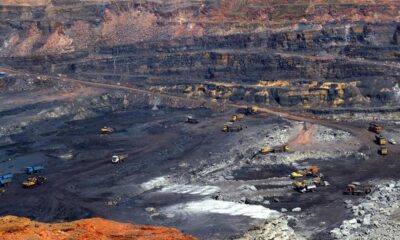
Ranchi: Coal India Limited (CIL) will invest Rs 3,300 crore to set up eight new coking coal washeries in Jharkhand, in a move aimed at improving domestic coal quality and reducing dependence on imported coking coal.

According to the company, the new washeries are expected to become operational by the end of 2029–30 and will together add a cumulative annual washing capacity of 21.5 million tonnes.

Of the eight proposed washeries, five will be developed by Central Coalfields Limited (CCL) with a combined annual capacity of 14.5 million tonnes, while the remaining three will be set up by Bharat Coking Coal Limited (BCCL) with a total capacity of 7 million tonnes per year.

Both CCL and BCCL are Jharkhand-based subsidiaries of Coal India.

The proposed units will be in addition to the 10 washeries already operated by CIL, which currently have a combined annual capacity of 18.35 million tonnes.

Apart from the new projects, CIL has also announced an additional investment of Rs 300 crore for the renovation and modernisation of its existing coking coal washeries to improve efficiency and ensure better utilisation.

Coal washing, also known as beneficiation, is the process of mechanically removing impurities, particularly ash, from coal in order to improve its calorific value and make it more suitable for industrial use.

The company said the expansion and modernisation of washery capacity would help improve the quality of domestic coking coal and gradually reduce import dependence in the years ahead.

Coking coal is a key raw material for steel manufacturing, but India continues to face a shortage of high-quality domestic reserves. Although the country has abundant coal resources, much of its coking coal contains high ash content, often ranging from 25 per cent to 45 per cent, making it less suitable for direct industrial consumption.

That has made India significantly dependent on imported coking coal, especially for the steel sector.

CIL said it is also leveraging a public-private partnership model and drawing on technical expertise from Tata Steel to strengthen the supply of quality coking coal for the domestic steel industry.

The development is significant for Jharkhand, which remains at the centre of India’s coal economy. If executed on schedule, the proposed washeries could also contribute to industrial activity, logistics expansion and employment generation in coal-bearing regions of the state.

However, the long-term impact will depend on timely execution, environmental compliance and how effectively the state’s mining economy is linked to wider industrial value creation.