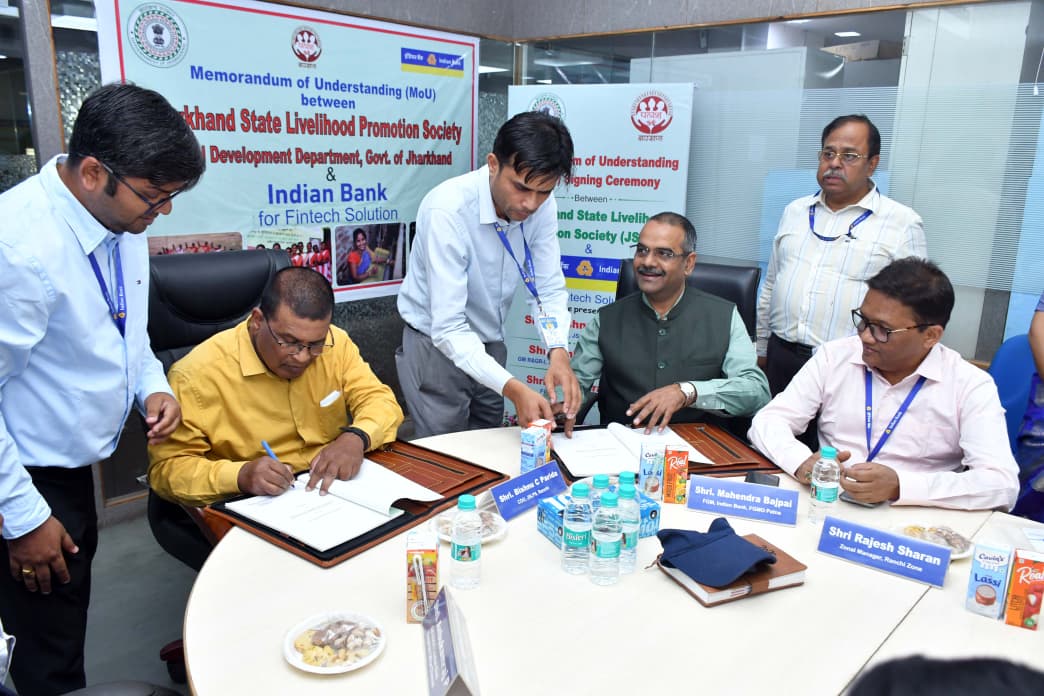
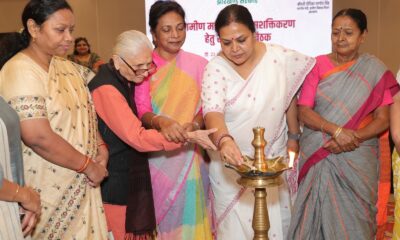
Jharkhand is positioning itself at the forefront of rural fintech innovation.
In a first-of-its-kind initiative, the Jharkhand State Livelihood Promotion Society has signed an MoU with Indian Bank to develop a digital payment gateway at the Cluster Level Federation (CLF) level, marking a significant shift in how rural financial transactions are managed.
A first at the grassroots level
What makes this initiative stand out is its scale and positioning.
While digital payments have expanded rapidly in urban and individual banking spaces, institutional-level digital finance in rural ecosystems has remained fragmented.
Jharkhand’s move changes that.
It becomes the first state in India to implement a payment gateway at the CLF level, potentially setting a template for other states.
How the system will work
The proposed platform will enable secure, real-time transactions across multiple layers of the rural economy:
- Cluster Level Federations (CLFs)
- Village Organisations (VOs)
- Self Help Groups (SHGs)
- Vendors and community cadres
The system is designed with built-in governance controls:
- Maker–checker–approver workflow
- Digital signatures and biometric authentication
- Real-time transaction tracking
- MIS-based monitoring and reporting
It will also integrate with existing platforms such as PFMS, eFMS, LokOS and Swalekha, creating a unified financial ecosystem.
Pilot first, scale later
The rollout will begin with a pilot across six CLFs, focusing initially on loan disbursement and repayment transactions.
If successful, the platform will be scaled to cover all financial flows within the rural livelihood ecosystem.
This phased approach indicates a shift toward tested digital governance rather than immediate mass rollout.
Why this matters
Jharkhand has one of India’s most extensive Self Help Group networks under its rural livelihood mission.
Yet, financial transactions within this ecosystem often face:
- Delays
- Limited transparency
- Manual bottlenecks
Digitising this layer could:
- Improve transparency and accountability
- Enable real-time monitoring of funds
- Reduce leakages and delays
- Strengthen financial discipline at the grassroots level
More importantly, it directly impacts women-led SHG networks, which form the backbone of rural livelihoods.
The larger shift: Rural fintech as governance tool
This initiative reflects a broader transition.
Digital payments are no longer just about convenience.
They are becoming a governance architecture.
By embedding financial controls at the CLF level, Jharkhand is effectively decentralising digital finance while maintaining oversight.
What this means for Jharkhand
Three potential outcomes emerge:
- If successful: Jharkhand becomes a model for rural fintech integration
- If partially successful: Improved efficiency but limited structural change
- If poorly executed: Technology without adoption at the grassroots
The difference will depend on:
- Training and capacity at CLF level
- Ease of use of the platform
- Reliability of digital infrastructure in rural areas
The larger question
Jharkhand has taken a bold digital step.
But can technology reshape rural finance without addressing on-ground realities?
Will SHGs and federations adopt this system at scale
or will it remain a pilot-driven success story?
Because in rural India, innovation is not defined by launch.
It is defined by adoption.