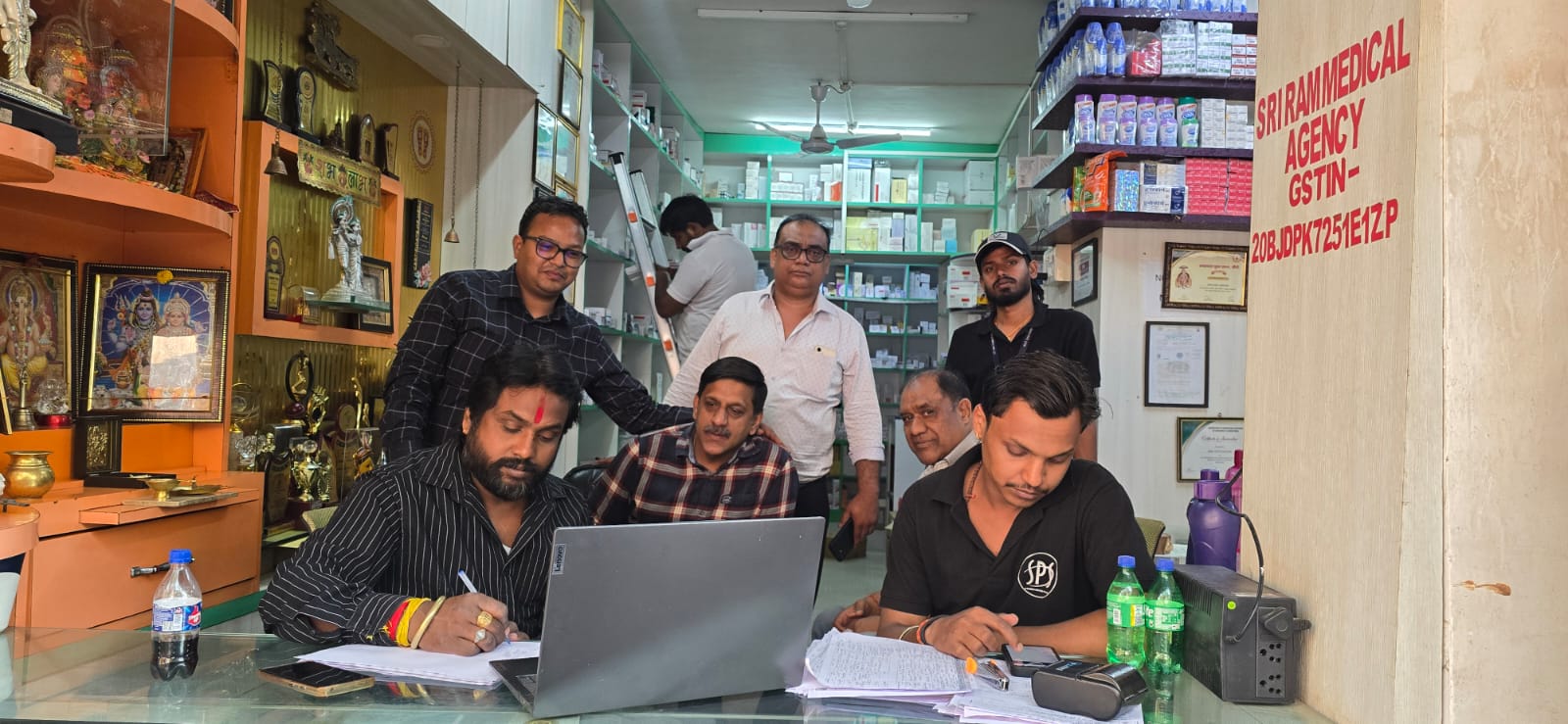
In a push to simplify business compliance at the local level, the Federation of Jharkhand Chamber of Commerce and Industries, in collaboration with the Ranchi Municipal Corporation, organised a trade license facilitation camp in Upper Bazaar.
Held at Shriram Medical Agency on Shraddhanand Road, the camp provided on-the-spot services for new trade licenses, renewals and holding tax payments, drawing participation from local traders.
Numbers reflect steady demand for compliance support
The camp saw measurable response from the business community:
- 15 applications for new trade licenses
- 12 renewals processed
- 9 holding tax payments completed
- 14 BTC-related applications submitted
In addition, several pending applications were revived, with traders submitting missing documents to fast-track approvals.
Bridging the last-mile compliance gap
For many small and mid-scale traders, navigating municipal procedures remains a challenge.
“Multiple trader issues were resolved through this camp, and similar initiatives will continue to improve ease of doing business,” said Civic Amenities Sub-Committee Chairman Amit Kishore.
The initiative highlights a key gap.
While digital systems exist, last-mile facilitation still depends on physical outreach and institutional coordination.
A replicable model for urban governance
This is not a one-off effort. A similar camp was organised earlier in the week at the Chamber Bhawan, indicating a continuity-based approach rather than event-based intervention.
For city governance, this model offers clear advantages:
- Reduces compliance friction for businesses
- Improves tax collection efficiency
- Builds trust between traders and civic authorities
What this means for Ranchi
As Ranchi expands commercially, the pressure on regulatory systems is increasing.
Efforts like these signal a shift toward facilitative governance, where institutions move closer to stakeholders instead of relying solely on formal processes.
The larger question
Can such camps evolve into a structured system?
If scaled across markets and wards, this approach could redefine how urban compliance works in Jharkhand.
Because for small businesses, ease of doing business often begins not with policy, but with access.