Mining, Money and Development: A New Balance in Jharkhand
Godda is witnessing a shift in how development is being delivered on the ground. In Sundarpahari block, the start of compensation distribution for the Jitpur mining project marks more than an administrative exercise. It signals a more structured approach to linking investment with local benefit.
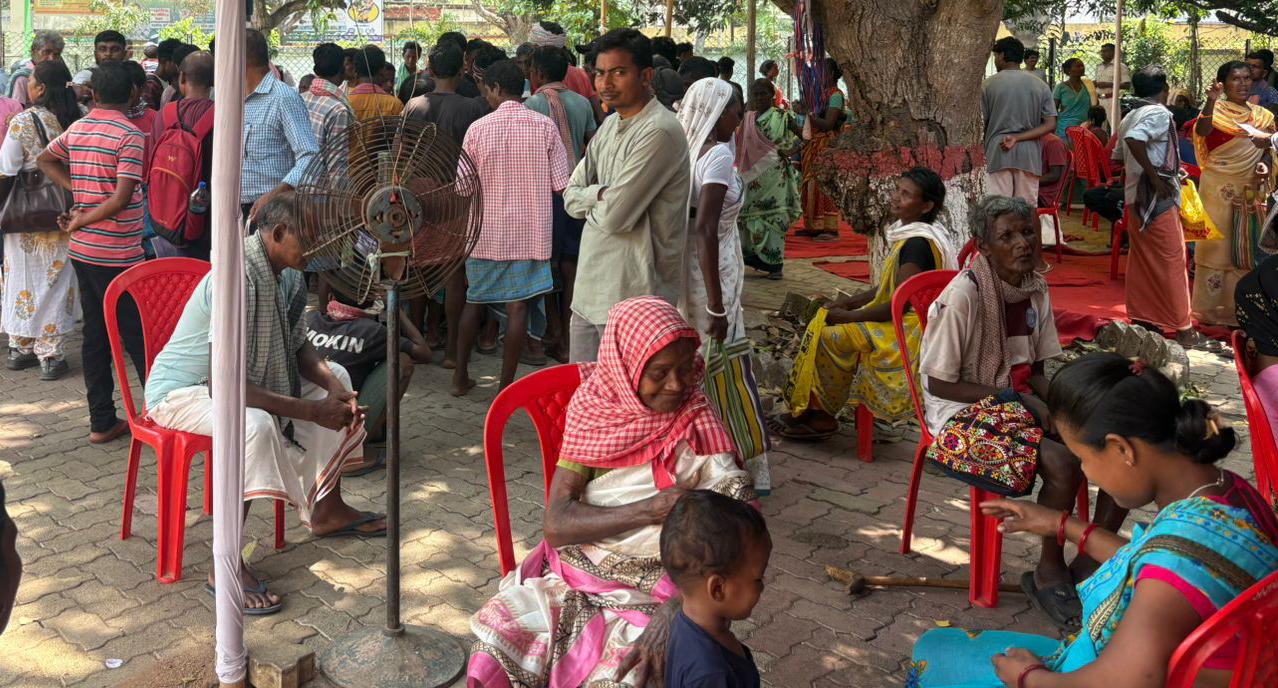
On the first day itself, over 150 raiyats participated in the compensation camp. Documents were verified, bonds submitted, and payments moved forward in an organised manner. For many, this is the first step towards transitioning into a new economic phase with financial support in hand.
Direct Benefit to Rural Households
Compensation in such projects is not just about land value. It brings immediate liquidity into rural economies, often at a scale that individual households would otherwise take years to accumulate.
For families in mining zones, this creates opportunities.
- Investment in housing
- Education for children
- Small businesses and alternative livelihoods
If supported properly, this shift can move households from subsistence to more diversified income streams.
Administrative Efficiency on Display
The conduct of the camp reflects an increasingly coordinated administrative model. Revenue officials, field staff, and law enforcement worked together to ensure smooth verification and processing.
Such structured camps reduce delays, improve transparency, and build confidence among beneficiaries. The presence of officials on-site also makes the process more accessible for rural residents who otherwise struggle with bureaucratic procedures.
This is a crucial improvement in delivery.
Industry Participation and Local Linkages
Mining projects in Jharkhand are not operating in isolation. Alongside compensation, there is visible corporate engagement in affected areas.
Infrastructure development, transport networks, and support services linked to mining activity tend to create local economic ecosystems. In regions like Godda, this means increased connectivity and new livelihood avenues.
Corporate participation, when aligned with local needs, can accelerate this process.
CSR as a Supporting Layer
Health camps and similar initiatives in mining regions are emerging as an important support system. They bring essential services closer to communities, especially in areas where access has historically been limited.
While not a substitute for public systems, these efforts add to the overall development framework. They address immediate needs while larger structural improvements take shape.
Towards a More Inclusive Model
The evolving approach suggests a gradual shift from extraction-led development to participation-led development.
Compensation is being formalised.
Processes are becoming more transparent.
Engagement between administration, industry and communities is increasing.
This does not eliminate all challenges, but it creates a more balanced starting point.
The Development Opportunity
Jharkhand’s mineral wealth has always been central to its growth story. The difference now lies in how that growth is being shared.
If compensation is timely, if rehabilitation is aligned with local realities, and if new economic opportunities are nurtured, mining can become a catalyst for broader rural transformation.
The early response in Godda indicates that people are willing to engage with this process.
A Transition in Motion
The compensation camps in Sundarpahari are not just about payouts. They represent a transition that is already underway.
From land to liquidity.
From isolation to connectivity.
From uncertainty to structured opportunity.
The real measure of success will emerge over time. But for now, the process reflects a more organised and inclusive attempt to align development with people on the ground.
And that, in Jharkhand’s mining landscape, is a step forward.