


Business Organization
Jharkhand business climate: taxes, power costs, chamber concerns
Jharkhand Chamber flags rising holding tax, power tariff issues while backing building regularisation policy. Full analysis of business impact.

Jharkhand Business Climate: Chamber Flags Rising Costs, Backs Policy Reforms
Jharkhand’s business community has sent a clear message. While policy reforms are being welcomed, rising operational costs and infrastructure gaps are emerging as key concerns.
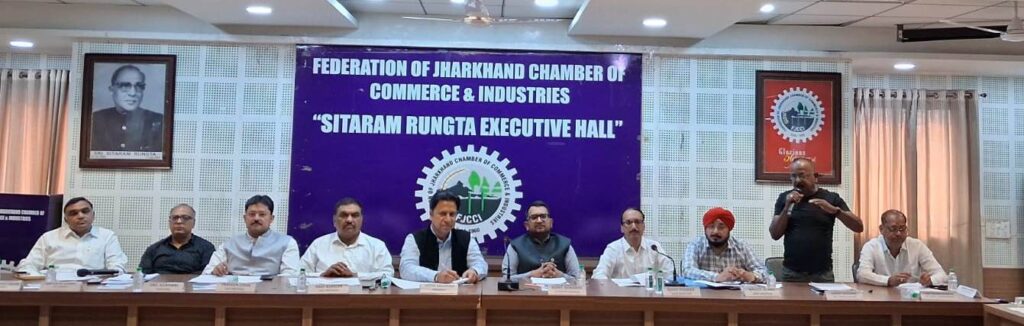
At a recent meeting of the Federation of Jharkhand Chamber of Commerce and Industries, industry representatives appreciated the proposed building regularisation scheme. At the same time, they highlighted issues related to holding tax hikes, electricity tariffs, and local-level regulatory challenges.
Building Regularisation Scheme Gets Industry Support
Chamber president Aditya Malhotra said the building regularisation plan is a positive step that can benefit a large number of citizens and businesses.
Such schemes can help formalise properties, improve compliance, and unlock economic value. In states like Jharkhand, where informal construction has been widespread, regularisation can also expand the tax base without imposing new burdens.
For businesses, clarity in property status directly impacts investment decisions.
Holding Tax Hike Raises Cost Concerns
One of the key issues raised was the continuous increase in holding tax across urban local bodies.
Industry members pointed out that higher taxes are leading to increased rents and service costs. This directly affects both businesses and consumers.
From an economic perspective, rising fixed costs can reduce profitability and slow down new investments. It can also weaken consumer demand by impacting purchasing power.
Power Tariff and Water Shortage Hit Industry
Concerns were also raised over rising electricity tariffs, particularly in areas under the Damodar Valley Corporation.
In Bokaro’s industrial region, businesses are reportedly spending Rs 5,000 to Rs 10,000 daily on water procurement. This highlights a deeper infrastructure issue.
Reliable access to power and water is critical for industrial growth. When basic inputs become expensive or uncertain, long-term sustainability of industries comes under pressure.
Regulatory Challenges at Local Level
In Jamshedpur, recent directives on occupancy certificates have created operational hurdles.
Businesses and residents have reported disruptions in essential services like electricity and water due to compliance requirements. This points to a gap between policy implementation and ground readiness.
Streamlining such processes is crucial to maintaining ease of doing business.
Cybersecurity and Regional Infrastructure Issues
The Chamber also highlighted concerns over cybercrime incidents and frequent power cuts in regions like Santhal Pargana.
These issues add to the overall risk perception for businesses operating in the state.
A stable and secure operating environment is essential for attracting both local and external investments.
Chamber Strengthens Internal Systems
The meeting also reflected internal reforms within the Chamber.
More than 140 sub-committee meetings have been conducted this session, indicating active engagement. A 13-member constitutional committee has been formed to review organisational structure and governance.
Inactive memberships have also been removed to improve efficiency.
Jharkhand’s Economic Turning Point
Jharkhand is at a critical stage in its economic journey.
Policy initiatives like building regularisation show intent to reform. However, rising taxes, infrastructure gaps, and regulatory friction highlight the need for balanced execution.
The challenge lies in ensuring that compliance does not come at the cost of competitiveness.
Growth Needs Balance
Jharkhand’s growth story will depend on how well it balances reform with ease of doing business.
If policy clarity is matched with infrastructure support and cost stability, the state can strengthen its investment climate.
The signals are clear. The response will determine the outcome.











Jharkhand pushes innovation agenda

Ranchi turns vertical


