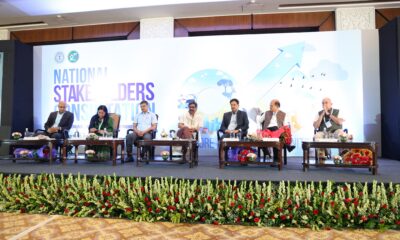
Jharkhand Finance Minister Radha Krishna Kishore expressed strong dissatisfaction over the working of banks in the state. During the 93rd State-Level Bankers’ Committee (SLBC) meeting, he questioned poor performance in social security schemes, rising NPAs, and delays in key data submissions.
The meeting, held at the Jharkhand Secretariat, included officials from the Reserve Bank of India, NABARD, leading banks, and district managers. The minister said financial inclusion must reflect real progress, not just numbers.
Accountability on Bank Performance
Kishore pulled up 19 banks for underperforming in social welfare schemes. He also expressed anger over missing district-level SLBC meetings in six districts, including Ranchi, Deoghar, and West Singhbhum.
He noted that IndusInd Bank’s NPAs increased nearly elevenfold, while Fino Bank continued to show a high number of inactive business correspondents. “Accurate data is the foundation of good governance,” he said, warning that delays would no longer be tolerated.
CD Ratio Shows Slow Progress
Officials reported that Jharkhand’s credit-deposit (CD) ratio rose from 51.32 percent to 52.48 percent during the last quarter. Kishore welcomed the rise but said the pace was too slow.
He added that the figure showed growing public trust in banking but urged that “this growth must reach the last person.” The minister emphasized lending to farmers, rural entrepreneurs, and youth as key to inclusive progress.
Banking Outreach Still Uneven
Against a national average of 17 branches per lakh people, Jharkhand has only 10. Since the previous SLBC meeting, only 13 new branches have opened. Kishore directed banks to create a yearly expansion plan to close the gap.
“Districts like Giridih, Palamu, Chatra, Garhwa, Dumka, and Sahebganj still have per-capita incomes near ₹50–60 thousand,” he said. “Better banking access can change this.”
Guruji Credit Card Scheme Under Watch
Under the Guruji Credit Card Scheme, around 1,400 applications remain pending. The minister ordered banks to clear all by December 15.
He reminded bankers that “each sanctioned loan means one more family gaining income and self-reliance,” urging faster implementation.
Structural and Policy Reform Push
Kishore called for stronger district-level coordination, transparent reporting, and district-wise performance rankingsto promote competition. The finance department plans to introduce performance-linked targets covering inclusion, social-security enrolment, and rural-credit growth.
A Call for Shared Responsibility
“Economic growth cannot rely on government spending alone,” Kishore said. “Banks must act as partners in Jharkhand’s growth story.”
Experts at the meeting agreed: while the CD ratio is improving, the next challenge is ensuring credit reaches people who need it most.
Editorial View
The SLBC meeting underscored a clear message, Jharkhand’s growth depends on stronger banking participation. Modest gains in the CD ratio are encouraging, but rural outreach, data discipline, and credit delivery still need attention.
With firm deadlines and new directives, the coming months will reveal whether banks can turn policy into measurable impact.