Connect with us

Business & Industry

Jharkhand’s $256 Billion Transition Plan: Life After Coal

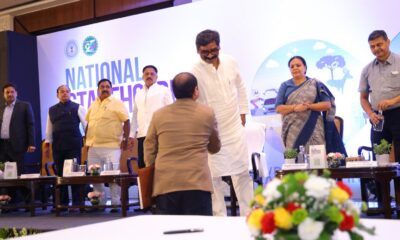
Jharkhand has released a landmark roadmap aimed at preparing the state for a future beyond coal. The Just Transition Report, developed by the state’s Sustainable Just Transition Task Force with IEEFA, outlines how Jharkhand can shift from a fossil-fuel-dependent model to a diversified green economy while protecting workers and communities.

Published

on

Tribal Beauty Meets Mining Tourism

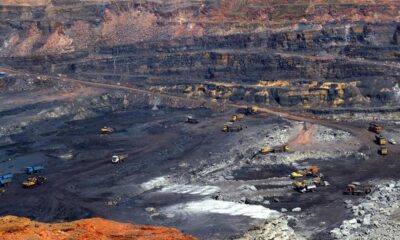
At sunrise in Jharkhand’s coal belt, trucks idle in lines, tea boils in steel kettles and workers tighten boots before walking toward dark pits carved over generations. Traders lift shutters, labour contractors check attendance sheets and the familiar smell of coal dust hangs in the air. This morning scene has been the heartbeat of Jharkhand’s economy for decades.

Coal shaped districts, funded welfare programmes, created industrial clusters and powered steel towns. But the ground beneath this legacy industry is shifting. The state has released a landmark Just Transition Roadmap, signalling a deliberate move toward a future where coal declines and clean-industry corridors emerge. It is not a short-term policy push. It is a generational restructuring worth $256 billion (₹21.52 lakh crore) planned through 2070.

The roadmap has been prepared by Jharkhand’s Sustainable Just Transition Task Force with the Institute for Energy Economics and Financial Analysis (IEEFA). The goal is ambitious: ensure a fair transition for workers and communities, build sunrise industries, secure revenues, and avoid socio-economic disruption as coal wanes.

A deep dependence and a warning

Jharkhand’s fiscal dependence on coal is clear and structural. The report notes:
“Fossil fuels contributed 32% to Jharkhand’s own revenue, with coal alone accounting for 17%.”

Half of Jharkhand’s tax revenue is linked to coal, steel, cement, petroleum and downstream value chains. Education, health and welfare programmes rely heavily on this income. The task force warns that if demand softens without preparation, revenues may shrink sharply, squeezing state finances.

The report bluntly states the stakes: the shift could be either “an opportunity” or could “trigger fiscal strain and social distress” depending on planning and execution.

The $256-billion transition cost

The roadmap estimates that US$256 billion will be needed between 2026 and 2070 for Jharkhand’s transition from fossil fuels, “to maintain both social stability and economic growth.”

This covers mine closure, land reclamation, energy diversification, workforce reskilling and community protection. Of this, more than US$12.5 billion is assigned to workers and mining-affected communities for income support, enterprise development and compensation.

The report also spells out that transition costs will be high for environmental rehabilitation and industrial decommissioning. Scientific mine closure alone is projected at $18.1 billion net after escrow adjustments. Thermal plant shutdowns will require $5.7 billion.

Coal will decline, but not abruptly

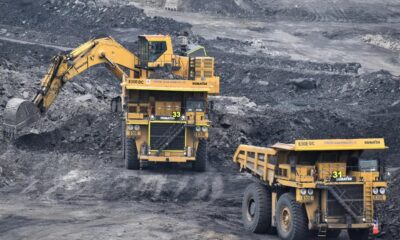
Jharkhand has 217 coal mines, with 101 active mines producing 259 million tonnes per year. Coal production is expected to peak around 2047 and then fall until 2070. The phased decline gives time to prepare, but it also demands policy continuity across decades.

For many workers, the change is unsettling. A dumper operator in Bokaro voiced the quiet anxiety spreading across coal districts:
“Coal fed us. If the mines slow, what work will we do next?”

That question lies at the heart of the transition. For Jharkhand, this is not just about shifting energy systems. It is a social contract.

Planning for lives, not just megawatts

The report stresses:
“The transition should also be equitable to livelihoods and communities directly or indirectly dependent on the state’s fossil fuel economy.”

It estimates ₹766 billion for labour support and ₹288.4 billion for community resilience measures, including health, housing, education, skill training and small business support. A large informal workforce — truck drivers, loaders, mechanics, cleaners, shopkeepers — will need new pathways.

The economy after coal

Jharkhand aims not to simply phase out coal, but build a modern industrial base. The report says the state must build “new, resilient, and green” systems rather than only wind down the old.

Key sectors identified:

  • Renewable energy and battery storage
  • Green steel and hydrogen
  • EV and battery manufacturing
  • Critical minerals processing
  • Natural farming, forestry livelihoods and carbon markets
  • Energy plantations and bioeconomy projects

IEEFA estimates a net positive revenue impact of US$79.3 billion over the transition period if the roadmap is executed effectively.

Leadership views: ambition with realism

Development Commissioner Ajoy Kumar Singh said the state must anchor the change in financial discipline and social protection:

“We can start with green budgeting as a key step. Future-ready planning integrates social safeguards with economic diversification through investments in green infrastructure, clean energy and low-carbon sectors to promote inclusive growth.”

Task Force Chair A.K. Rastogi underlined the opportunity ahead:

“The reports present pathways of investment and finance and industrial decarbonisation, which are two thematic areas among eight identified by the state. A well-planned, sustainable financing strategy can transform potential disruption into opportunity, enabling the state to capture high-growth sectors, create sustainable livelihoods and strengthen local economies.”

Former Finance Secretary Prashant Kumar offered a caution:

“Transitioning to a greener economy requires more than policy ambition, it requires sustained financial innovation… and people-centric implementation.”

IEEFA researchers highlighted the scale of capital mobilisation needed. Research lead Shantanu Srivastava called the roadmap an effort to “mobilise unprecedented levels of capital”, while co-author Soni Tiwari described it as a “high-risk, high-return opportunity”.

Financing the transition

The report makes one point clear:
“Public funds alone are not sufficient… a sustainable finance framework involving public finance, private investment, concessional debt and international climate funds is essential.”

The plan proposes:

  • A state transition fund
  • Green budgeting
  • Blended-finance models
  • DMF and CSR alignment
  • Coal-asset retirement facility backed by development banks
  • Land repurposing strategy
  • Green-sector facilitation cell

This mix aims to reduce fiscal stress and attract long-term investors.

From extraction to creation

This is a decades-long project, vulnerable to political cycles and institutional delays. The roadmap calls for steady implementation, land reforms, regulatory clarity and capacity building. Jharkhand currently has less than 12% renewable power in its installed capacity, far below the national average of 50%  a gap the state must close to compete in clean manufacturing.

Yet the transition also carries a larger narrative. It is a shift from the story of extraction to one of innovation and inclusion.

Coal still wakes Jharkhand’s mornings today. In the future, the hum may come from solar fields, hydrogen units, battery plants and training centres. The challenge is not shutting mines. It is ensuring what opens in their place and who is included.

If Jharkhand succeeds, this roadmap could become a national reference for coal-rich states confronting the age of decarbonisation. Done poorly, mines may shut before alternatives mature. Done right, Jharkhand can build a new industrial era rooted in sustainability and social justice.

The transition is not a switch. It is a journey, and as the report says, it begins now.

Editor, Jharkhand Incorporation. Shashi Singh is a seasoned journalist shaped by years of reporting, storytelling, and media work across Mumbai and Jharkhand. With experience in journalism, media strategy, and content creation, he has worked across print, digital, and television formats and carries a perspective rooted in both metropolitan media ecosystems and ground realities in the heartland. Now back in Jharkhand, he is focused on building a platform that highlights the state’s economic landscape, business voices, and development ambitions. Through Jharkhand Incorporation, he aims to bring clarity, depth, and accountability to conversations around industry, entrepreneurship, policy, and growth in one of India’s most resource-rich yet underreported regions.