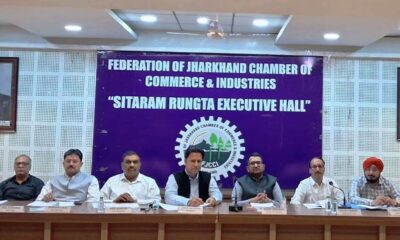
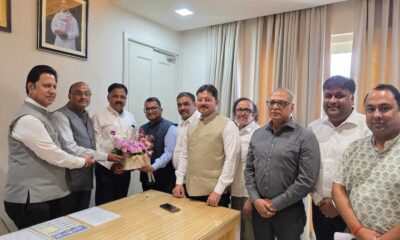
A special session hosted by the Federation of Jharkhand Chamber of Commerce and Industries on Saturday turned into a wide-ranging dialogue on the state’s economic direction, resource policy and its place in India’s long-term growth story. Former Union Minister Suresh Prabhu, who attended as chief guest, assured industry leaders that he would facilitate a dedicated meeting with the Finance Commission to discuss Jharkhand’s concerns.
The chamber leadership, economists and policymakers converged on one theme: Jharkhand holds enormous potential, but its policies and growth rate need to match national ambition if the state hopes to keep pace with the rest of India.
Premium Royalties and a Stronger Resource Policy
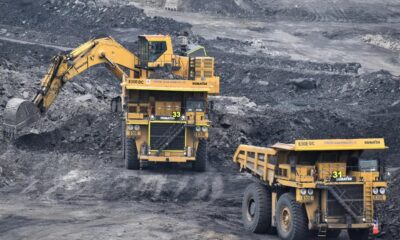
Prabhu said Jharkhand’s mineral wealth forms a backbone of the national industrial system, and the state must be compensated accordingly. “A resource-rich state deserves premium royalty on minerals,” he said, adding that such a framework is essential to ensure Jharkhand receives economic returns aligned with the resources it supplies to the nation.
He stressed that the state’s mineral policy should include sharper focus on rare earth elements, which have become strategically important worldwide. Jharkhand, he said, must not fall behind as India expands its footprint in emerging technologies.
Rare Earth Opportunities Move to the Forefront
Calling rare earths a “major global asset,” Prabhu urged the state government to identify, map and prepare policy pathways for their scientific utilisation. With India prioritising clean energy, electronics, defence and advanced manufacturing, rare earth minerals could reshape Jharkhand’s industrial future.
Industry representatives see this as a major opportunity for new investments, downstream industries, and high-value manufacturing clusters.
Chamber Calls for an ‘Eastern Growth Corridor’ Vision
In his presidential address, Chamber President Aditya Malhotra said eastern India’s moment has arrived, and Jharkhand should be positioned as its economic engine. He called for transparent policies, stronger industry-government coordination, rapid infrastructure upgrades and scientific use of natural resources.
He urged both the Centre and the state to treat Jharkhand as a priority within a broader Eastern Growth Corridor framework that supports mining, manufacturing, MSMEs, services and the startup sector.
Jharkhand’s Growth Rate Must Match India’s Trajectory
Former Rajya Sabha MP Mahesh Poddar warned that despite national advances in technology and new-age sectors, Jharkhand remains trapped in a mineral-centric cycle without adequate value addition. He noted that the state’s economic growth must keep pace with India’s overall rate if it wants to avoid long-term backwardness.
Poddar drew attention to the parallel between the Prime Minister’s 2047 goal for a developed India and the Chief Minister’s vision for a developed Jharkhand by 2050. The timelines may differ slightly, he said, but the pace of growth should be nearly the same. “If we don’t accelerate now, we will continue to fall behind,” he cautioned.
District-Level Development and Regional Imbalance
Prabhu also highlighted uneven development across districts and said each region requires a tailored approach. Jharkhand, he noted, must adopt a district-specific development plan that recognises different local strengths, challenges and economic structures.
This view aligns with long-standing concerns among industry leaders about regional disparities between mining belts, industrial zones and largely agrarian districts.
A Broader Economic Assessment from Experts
Economist Ayodhya Nath Mishra presented a detailed analysis of the state’s economic condition. He said that while challenges exist, the opportunities ahead are far greater if Jharkhand prioritises industrial growth, employment generation, regional integration and fair use of natural resources.
His remarks added depth to the broader theme of the day: Jharkhand has every ingredient needed for growth, but its policies and execution must catch up with its potential.
Commitment to Continued Dialogue
Prabhu assured industry members that he would soon schedule a meeting with the Finance Commission to take up concerns related to royalties, resource allocation, incentives and sectoral policy gaps. He also conveyed his willingness to continue structured interactions with the chamber.
The session concluded with a vote of thanks by Chamber General Secretary Rohit Agarwal. Senior office bearers, former presidents and more than a hundred members attended the event.