

Business & Industry
Jharkhand Emerges as Key Hub in India’s Critical Minerals Strategy
Jharkhand is positioning itself as a strategic hub in India’s critical minerals roadmap, with growing evidence of lithium, rare earth elements and other key resources vital for clean energy and defence.


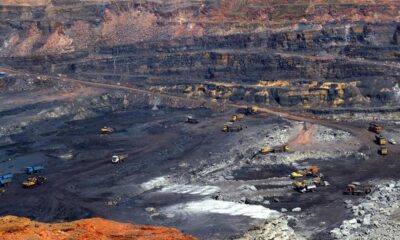
Jharkhand, long known for its coal and iron ore wealth, is now emerging as a significant player in India’s critical and strategic minerals landscape. Recent geological studies and exploration initiatives have identified the presence of lithium, rare earth elements (REE), graphite, titanium, vanadium and other high-value minerals across several districts of the state, placing Jharkhand at the centre of India’s clean energy and technology transition.
With global demand for critical minerals accelerating due to the rapid expansion of electric vehicles, renewable energy systems and advanced electronics, Jharkhand’s mineral base is gaining renewed national and international attention.
Strategic Minerals for a Low-Carbon Economy

Critical minerals such as lithium, cobalt, nickel and rare earth elements are essential for manufacturing batteries, wind turbines, solar panels, semiconductors and defence technologies. India has officially notified 30 minerals as “critical minerals” under the Mines and Minerals (Development and Regulation) Amendment Act, 2023, to strengthen domestic exploration and reduce dependence on imports.
Jharkhand is reported to host more than 20 of these notified critical and strategic minerals. Geological surveys have confirmed lithium-bearing mica and pegmatite belts in the Koderma–Giridih region, including Tilaiya, Dhodhakola-Kusuma, Pihra and Gawan blocks. Preliminary laboratory analysis has indicated lithium concentrations reaching up to 10,000 parts per million in selected samples, suggesting strong future exploration potential.
Rare Earth Elements and Graphite Deposits


Rare earth elements, which are vital for electric motors, missiles, smartphones and wind turbines, have been identified in pegmatite formations, coal by-products and iron-ore-associated shales in Jharkhand. These elements are currently dominated by global supply chains controlled largely by China, making domestic sources strategically important for India.
Graphite, another key mineral used in lithium-ion battery anodes, has been reported in Palamu, Garhwa and Latehar districts. Titanium, vanadium and gallium have been traced to bauxite deposits in Lohardaga and Gumla regions, while copper, nickel, cobalt and gold occur in the Singhbhum Shear Zone, a historically mineral-rich belt of the state.
Hidden Value in Coal and Iron Ore Waste
Scientific studies have also highlighted the potential of Jharkhand’s coal and iron ore deposits as secondary sources of rare earth elements and critical minerals. Coal and its by-products are known to contain measurable quantities of REE, while tuffaceous shale associated with iron ore mining has shown traces of titanium, zirconium and lanthanum group elements.
Experts suggest that with appropriate recovery technologies, mining waste and tailings could become an additional resource base, helping Jharkhand move towards a more sustainable and circular mining economy.
National Policy Push and Global Partnerships
India has initiated major regulatory reforms to boost critical mineral exploration, including the introduction of exploration licenses, central government auctions of critical mineral blocks and the engagement of notified private exploration agencies. International partnerships with Australia, Argentina and Quad countries aim to secure stable supply chains for lithium and rare earth elements.
Jharkhand has been identified as one of the key states aligned with this national strategy, given its geological potential and existing mining infrastructure.
Challenges of Sustainable Extraction
Despite its mineral potential, Jharkhand faces challenges related to extraction technology, environmental safeguards and community impact. Large parts of the mineral-bearing zones fall under forest and tribal regions, making ecological protection and social consent crucial.
Experts caution that unregulated or aggressive mining could lead to deforestation, water stress and displacement of indigenous communities. The emphasis, therefore, is on developing a balanced model that integrates mineral development with environmental sustainability and local livelihoods.
From Resource State to Technology State
Policy planners believe Jharkhand has the opportunity to move beyond being a raw material supplier and evolve into a value-added hub for battery manufacturing, mineral processing and green technology industries. Establishing processing units, research centres and skill development programs could create new employment avenues and reduce export of unprocessed minerals.
Jharkhand’s traditional philosophy of “Jal, Jungle, Jamin and Khanij” is increasingly being viewed as a framework for integrating resource use with conservation and inclusive development.
A Strategic Future Role
As India pursues its Net Zero emissions target by 2070 and accelerates its electric mobility and renewable energy programs, Jharkhand’s role in the critical minerals sector is expected to expand significantly. The state’s transition from a coal-driven economy to a strategic mineral hub could redefine its position in the national growth narrative.
What remains central is the question of how Jharkhand balances economic opportunity with environmental responsibility and social justice. The decisions taken today will determine whether the state becomes merely a supplier of raw resources or a leader in India’s clean energy and technology future.









Jharkhand lays foundation for film talent pipeline with SRFTI partnership

Jharkhand to Establish First Film and Television Institute with SRFTI

Jharkhand’s Moment on the National Stage: Santhali Film Angen Wins 72nd National Film Award

Palash: How Jharkhand’s Women’s Collective Became a Global Case Study

India International Mega Trade Fair 2026 in Ranchi

Bokaro Thermal Power Plant Shut Down, DVC Faces Heavy Costs

From Welfare to Enterprise: How Rs 2,500 a Month Is Helping Women Build Businesses in Koderma

Jharkhand’s Solar Policy: Decentralised Energy in Practice
