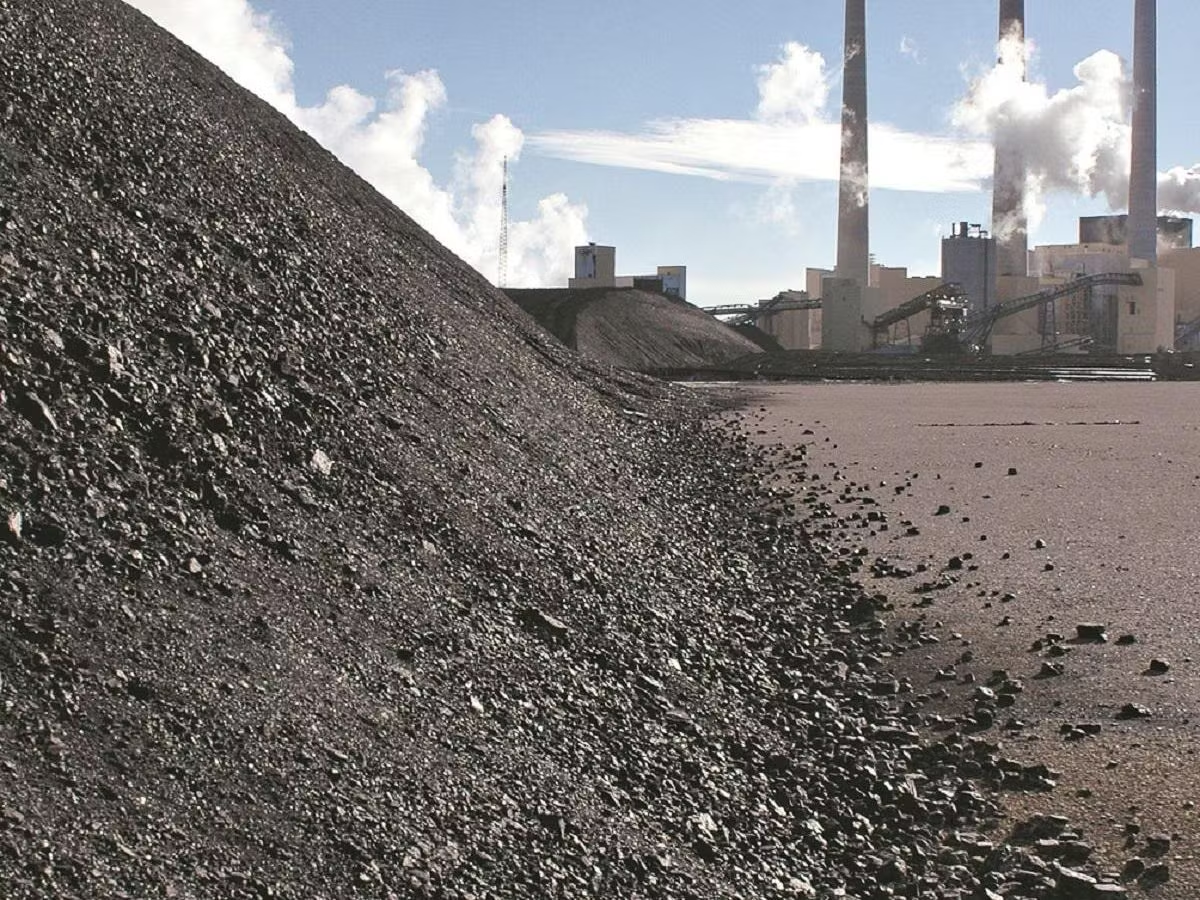
Coal imports fall 8.5% in February as domestic stockpiles rise, prices stay firm
India’s coal imports declined by 8.5 percent year-on-year to 16.55 million tonnes in February, reflecting a combination of high domestic stockpiles and firm global prices, according to data compiled by mjunction Services.
The trend signals a continued shift towards domestic sourcing, even as demand remains steady ahead of the summer season.
What drove the decline
The fall in imports is primarily linked to record-high coal inventories within the country and relatively expensive seaborne coal. According to Vinaya Varma, MD and CEO of mjunction, domestic producers are actively working to liquidate excess stock, which is reducing the need for imports.
mjunction is a joint venture between Tata Steel and Steel Authority of India Limited.
The import trend is expected to remain subdued in the near term as domestic supply continues to meet consumption levels.
Import pattern shows mixed signals
A closer look at the data shows divergence across coal categories:
- Non-coking coal imports dropped to 9.80 MT from 11.08 MT a year ago
- Coking coal imports rose slightly to 3.92 MT from 3.79 MT
For the April to February period of FY 2025-26:
- Non-coking coal imports declined to 137.60 MT from 152.26 MT
- Coking coal imports increased to 54.31 MT from 49.62 MT
This indicates that while thermal coal demand is increasingly being met domestically, dependence on imported coking coal for steel production continues.
Production and supply position
India’s coal production rose to 1,047.523 MT in 2024-25, up from 997.826 MT in the previous year, marking a growth of nearly 5 percent. The increase aligns with the government’s push for self-reliance in energy resources.
State-run Coal India Limited remains central to this strategy, with higher output helping stabilise domestic availability.
At the consumption end, coal stock at thermal power plants stood at around 55 million tonnes, sufficient for 24 days of uninterrupted power generation based on recent consumption patterns.
No immediate supply concerns
Officials from the coal ministry have indicated that there is no shortage risk despite rising summer demand. Domestic production is currently aligned with consumption, ensuring stability in the power sector.
Jharkhandinc Insight
The decline in imports is not just a short-term adjustment. It reflects a structural shift in India’s coal economy:
- Greater reliance on domestic mining
- Improved supply chain efficiency
- Strategic stockpiling to manage demand spikes
For coal-producing states like Jharkhand, this trend strengthens the case for deeper investments in mining infrastructure, logistics, and downstream industries. At the same time, the continued dependence on imported coking coal highlights a gap in India’s resource mix that remains tied to global markets.
The larger question going forward is whether India can sustain this balance between self-reliance and industrial demand without exposing itself to price volatility in critical segments like steel.