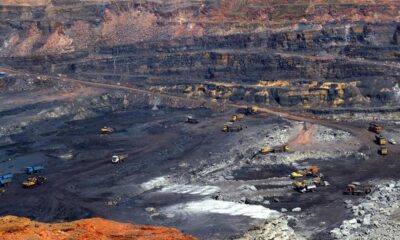
Jharkhand has earned ₹6,246 crore from minerals till August 2025. Strong digital monitoring, transparent policy, and GMVT cess collection are reshaping the state’s fiscal landscape.
Jharkhand’s mining sector is powering the state exchequer. By August 2025, the government collected 6,246.09 crore in mineral revenue, a mix of 3,892.40 crore from royalty and 2,352.68 crore from GMVT cess.
Officials say this marks a clear rise in transparency and compliance within the mining ecosystem. With a 12% year-on-year increase, Jharkhand’s resource economy is showing signs of structural improvement.
District Performance: Dhanbad Tops the Chart
The GMVT cess data places Dhanbad at the top with 383.30 crore, followed by Chaibasa (367.97 crore), Latehar (249.89 crore), and Pakur (239.04 crore).
Other key contributors:
Chatra: 215.82 crore
Ramgarh: 156.91 crore
Bokaro: 152.97 crore
Godda: 174.75 crore
Hazaribagh: 144.39 crore
Ranchi recorded 34.43 crore through mineral billing, showing stable operations in the capital region.
Dhanbad, India’s “coal capital,” remains the engine of Jharkhand’s mineral economy both in production and compliance.
GMVT Cess: Jharkhand’s Own Fiscal Lever
The Gross Mineral Value Tax (GMVT) is a state-specific cess applied on the total value of extracted minerals, over and above the central government’s royalty.
Its purpose is to fund infrastructure, welfare, and environmental restoration in mining-affected areas. For Jharkhand, GMVT has become a critical fiscal lever, generating 2,352 crore by mid-year and empowering the state to retain more of its mineral wealth.
Royalty vs GMVT at a glance:
Category
Royalty
GMVT Cess
Regulatory Control
Central Government
State Government
Basis
Mineral quantity/value
Gross Mineral Value
Purpose
Compensation for mineral ownership
Development of mining-affected regions
Digital Systems Reshape Mining Administration
The Mines Department attributes the revenue growth to digital governance and policy transparency. A series of digital interventions have modernized the sector:
E-auctions and automated check-posts increasing accountability.
Together, these systems have minimized leakages and made Jharkhand’s mining value chain traceable from pit to port.
Curbing Illegal Mining, One Checkpoint at a Time
Jharkhand’s focused crackdown on illegal mining and transport violations has been key to this year’s revenue jump.
Enhanced surveillance in Latehar, Chatra, and Hazaribagh traditionally vulnerable zones has tightened compliance. Field inspections, data-linked checkpoints, and digital waybills have added financial discipline to the sector.
Officials note that “the loss per truck is now the gain per state account.” The message is simple, efficiency is paying off.
Market-Linked Royalty Structure
The government revised its mineral pricing to align with market rates:
Coal: 14% royalty + ₹250 per ton cess
Iron Ore: ₹400 per ton cess
This adjustment, done under the OMGL framework, has boosted both transparency and revenue fairness. Jharkhand now ranks among the few states directly benefiting from price-responsive royalty systems.
Revenue with Responsibility
Experts say Jharkhand’s GMVT model is an example of fiscal responsibility in a resource-dependent economy. The funds collected are being reinvested in mining-affected districts for roads, drinking water, resettlement, and green rehabilitation projects.
Economists believe this approach strengthens the state’s fiscal autonomy while maintaining social and ecological accountability.
Looking Ahead: ₹20,000 Crore Target Within Reach
At the current pace, Jharkhand could exceed 20,000 crore in total mineral revenue by the end of FY 2025–26.
Upcoming coal and mineral block auctions and expanded digital surveillance are expected to accelerate the trend. The Mines Department is also preparing to integrate real-time environmental compliance into its digital platform.
With more mines moving online and automated, the department predicts higher transparency and faster settlement cycles.
JharkhandInc View
Jharkhand’s mining story is shifting from extraction to execution. The state is no longer content being a resource supplier; it’s building a transparent, technology-driven revenue model that keeps value within its borders.
As digital governance reshapes the mining map, Jharkhand’s experiment with GMVT and market-based royalties may soon serve as a policy case study for other mineral-rich states.