


Hazaribagh
How Pearl Farming Is Transforming Rural Livelihoods
Hazaribag is quietly building India’s first freshwater pearl farming cluster, where village ponds and reservoirs are being transformed into engines of rural enterprise, women-led livelihoods, and scientific aquaculture.

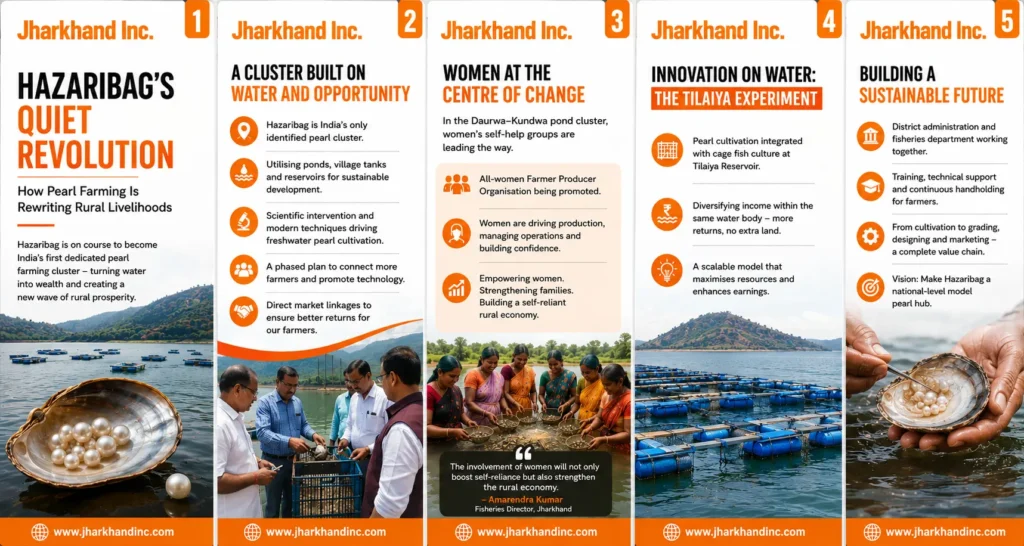
In a region long associated with forests, coal belts, and subsistence agriculture, Hazaribag is quietly shaping a new rural economy around an unlikely resource: pearls.
What is emerging here is not a pilot project in isolation, but a structured attempt to build India’s first dedicated freshwater pearl farming cluster. Backed by state intervention, technical support, and community participation, the initiative is steadily turning village ponds and reservoirs into sites of high-value production.
From Water Bodies to Economic Assets
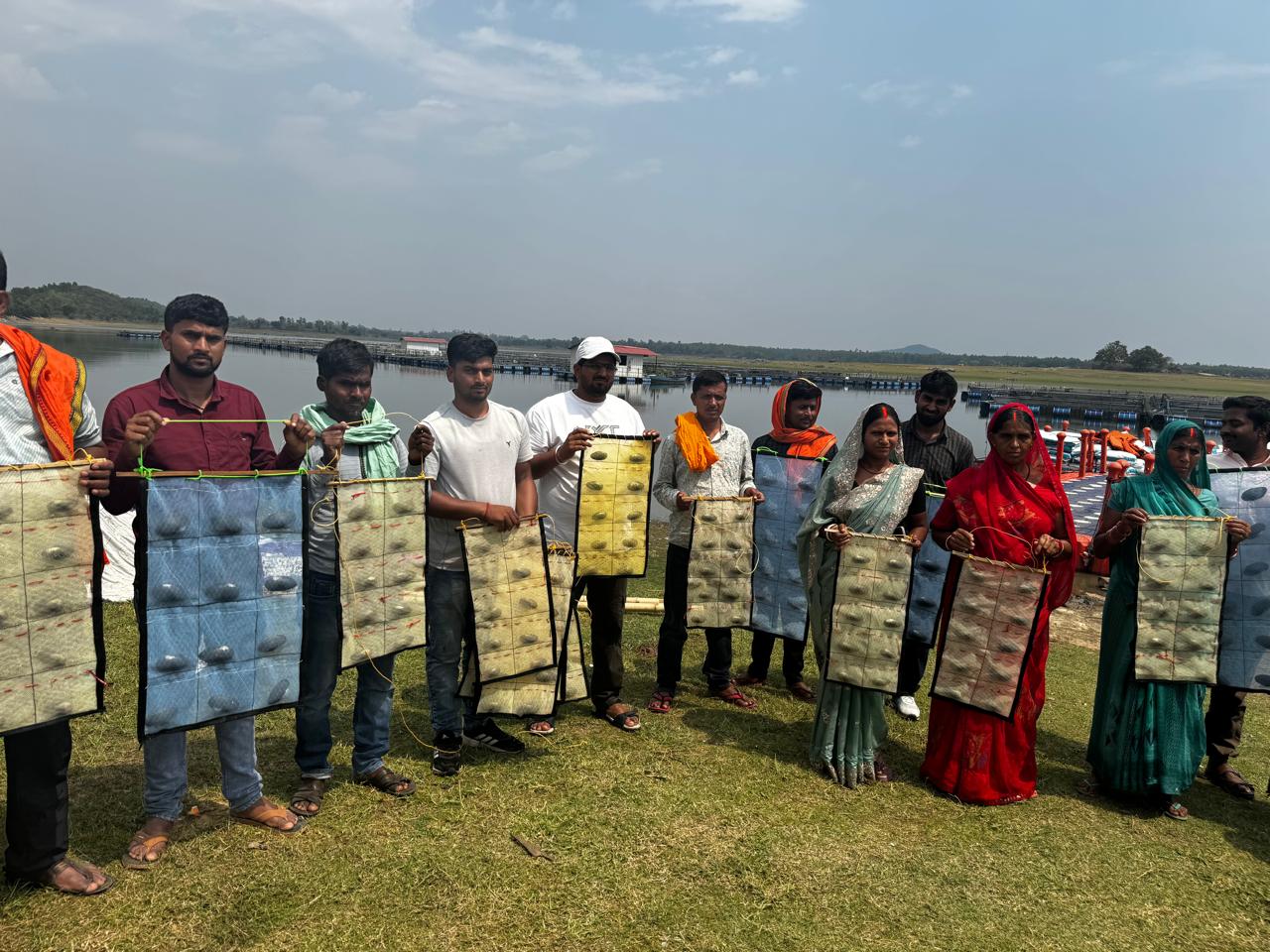
The cluster model rests on a simple but powerful idea. Instead of treating ponds and reservoirs as passive resources, the programme seeks to convert them into productive economic assets. Freshwater pearl cultivation, once seen as niche and geographically limited, is now being adapted to inland ecosystems through scientific techniques and training.
During a recent inspection, Fisheries Director Amarendra Kumar underlined the larger vision behind the initiative. He said Hazaribag has been identified as the country’s only pearl cluster due to its natural suitability and the potential to scale the activity through organised planning. The effort, he noted, is being developed as a national model through phased expansion, farmer integration, and direct market linkages.
Accompanied by officials including Shambhu Prasad Yadav, Kumar reviewed cultivation sites and training programmes, signalling administrative seriousness beyond symbolic announcements.
Women Driving the Transformation
One of the most significant aspects of the project is its social architecture. In the Daurwa–Kundwa pond cluster, women’s self-help groups are emerging as the operational backbone of pearl cultivation.
The administration is pushing for the creation of an all-women Farmer Producer Organisation, a move aimed at consolidating production, improving bargaining power, and ensuring better access to markets.
Officials believe this approach could have a multiplier effect. Beyond income generation, it strengthens financial independence, collective decision-making, and long-term community ownership of the initiative.
The Tilaiya Reservoir Model
At the Tilaiya Reservoir, a different but complementary model is taking shape. Here, pearl farming is being integrated with existing cage fish culture systems.
Instead of requiring separate infrastructure, pearls are cultivated along the edges of fish cages, allowing farmers to diversify income within the same water body. This integrated approach reduces risk and increases productivity without additional land use, making it particularly relevant for resource-constrained rural settings.
Administrative Push and Cluster Vision
The district administration, led by Deputy Commissioner Hemant Sati, is working in coordination with the fisheries department to scale the initiative.
The goal is clear: to develop Hazaribag into a national “model pearl hub.” This includes expanding farmer participation, introducing modern cultivation techniques, and building reliable market linkages so that production translates into sustained income.
Officials on the ground, including technical staff like Kiran, are ensuring that training and support systems remain continuous, preventing the programme from fading after initial enthusiasm.
Beyond Pearls: A New Rural Template
What makes this initiative significant is not just the commodity it produces, but the model it represents.
It reimagines rural development through:
- productive use of existing water resources
- community-led enterprise structures
- integration of technology with traditional livelihoods
- cluster-based scaling instead of scattered efforts
If sustained, Hazaribag’s pearl cluster could offer a replicable template for other inland regions across India. It shifts the narrative from scarcity to optimisation, from subsistence to enterprise.
In that sense, the real story is not about pearls alone. It is about how a district is redefining what rural economies can look like when local resources, administrative intent, and community participation align in the same direction.






NKTL Link Boosts Jharkhand Power Supply

When Tirupati Came to Munger


