Ranchi : Chief Minister Hemant Soren on Tuesday called for a new agricultural approach centred on water conservation, organic farming and modern technology, warning that climate change and declining groundwater levels pose growing challenges for farmers across Jharkhand.
Addressing the inauguration of the three-day Jharkhand Agriculture Product and Trade Fair 2026 at Morabadi Ground in Ranchi, Soren said the future of agriculture would depend on how effectively farmers and governments respond to environmental challenges while improving productivity and income.
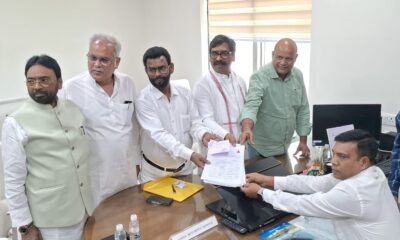
The chief minister launched the official logo of the fair and distributed benefits to farmers and beneficiaries under various schemes. These included financial assistance for cattle shed construction for Tana Bhagat families, appointment letters for veterinary and support staff, certificates to outstanding farmers and Digital AI Kits to 209 beneficiaries.
Agriculture remains backbone of Jharkhand
Describing agriculture as the foundation of human civilisation, Soren said nearly 80 per cent of Jharkhand’s population still depends directly or indirectly on farming for livelihood.
He noted that changing weather patterns, irregular rainfall and increasing pressure on natural resources are affecting agricultural productivity across the country.
“Water scarcity is emerging as one of the biggest challenges for agriculture. Groundwater is being extracted continuously, but adequate efforts are not being made to replenish it,” he said.
The chief minister urged farmers to create water harvesting structures on agricultural and barren lands and adopt measures such as recharge pits and soak pits to restore groundwater levels.
According to Soren, future agricultural success will depend on producing more with less water while protecting natural resources for future generations.
Balancing development and environmental protection
Highlighting environmental concerns, the chief minister said rapid urbanisation and infrastructure expansion should not come at the cost of forests and ecological balance.
He expressed concern over the large-scale loss of mature trees and stressed the need for greater public participation in conservation efforts.
“Development and nature must move together. Water, forests and greenery are essential not only for agriculture and livestock but also for human survival,” he said.
Birsa Harit Gram Yojana gains global recognition
Soren cited the success of the Birsa Harit Gram Yojana as an example of how long-term agricultural investments can improve rural livelihoods.
He said fruit plantations developed under the scheme on previously barren land are now generating visible results. Referring to women associated with the Jharkhand State Livelihood Promotion Society (JSLPS), he noted that mangoes produced in Simdega are being exported to London, reflecting the growing market potential of Jharkhand’s horticulture sector.
The chief minister said nearly 1.5 lakh acres of barren land have been brought under plantation activities through the programme, contributing to both environmental restoration and income generation.
Push for organic farming
Calling for safer and sustainable agricultural practices, Soren urged farmers to reduce dependence on chemical fertilisers and avoid excessive use of harmful substances in crop production.
He said growing consumer preference for chemical-free produce presents an opportunity for Jharkhand farmers to strengthen their position in the organic agriculture market.
The state government, he added, is working on mechanisms to make organic farming more accessible and economically viable for cultivators.
Technology and farmer empowerment
The chief minister stressed that technology adoption will be crucial for increasing productivity and improving farmers’ incomes.
He directed the Agriculture Department to identify and map progressive farmers across the state and announced that outstanding performers would be recognised under a proposed “Mukhyamantri Samman” initiative.
To improve communication between farmers and the government, Soren also instructed officials to develop a dedicated digital portal where cultivators can submit queries, suggestions and grievances and receive timely guidance from experts and government agencies.
Shared responsibility
Emphasising partnership between farmers and the government, Soren said agricultural transformation would require equal commitment from both sides.
“The government will shoulder half the responsibility and farmers will shoulder the other half. If we work together, no one can stop Jharkhand’s farmers from succeeding,” he said.
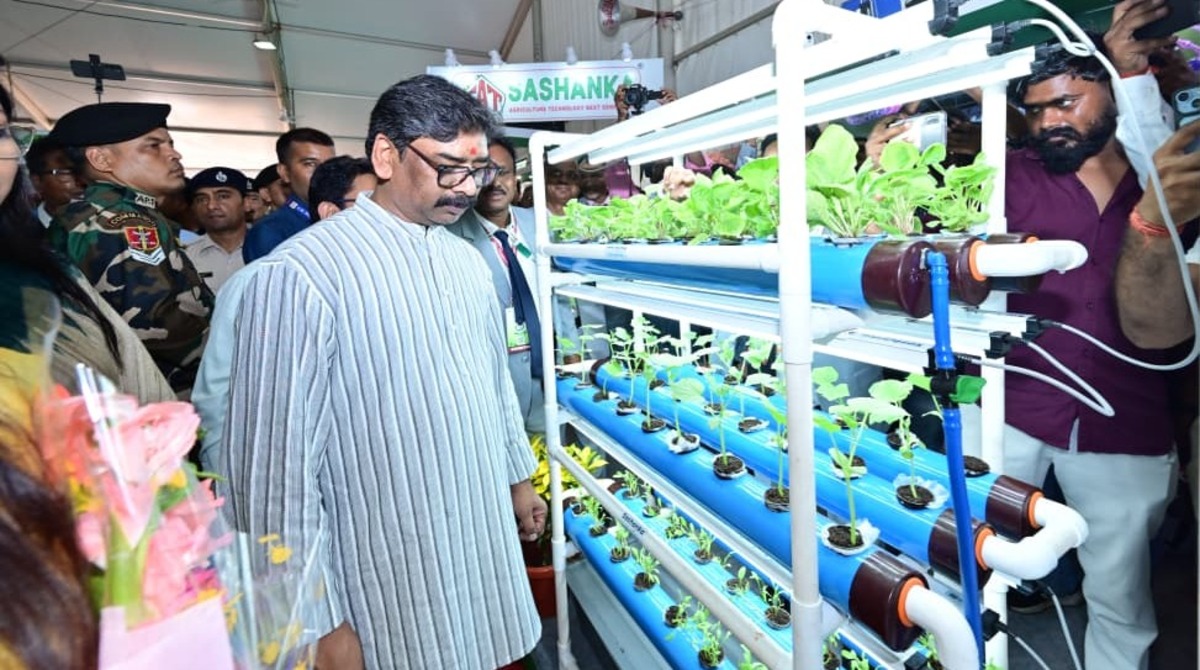
The fair, being held from June 16 to 18 at Morabadi Ground, has brought together progressive farmers, agricultural scientists, researchers, government agencies and agribusiness stakeholders. Around 200 stalls showcasing agricultural innovations, modern technologies and best practices have been set up, while seminars and technical sessions are expected to expose farmers to emerging trends in the sector.
The chief minister also flagged off Birsa Krishi Rath 2026 vehicles and visited exhibition stalls during the event.